


Most homeowners in North Carolina only think about their roof when something goes visibly wrong. A ceiling stain appears, a shingle lands in the yard after a storm, or a gutter pulls away from the fascia. But waiting for visible signs of trouble is one of the most expensive habits a homeowner can develop. Annual roof inspections catch problems early, support insurance claims after storms, and play a direct role in keeping your home’s value strong year after year.
Table of Contents
- Why annual roof inspections matter in North Carolina
- What an annual roof inspection covers
- How regular inspections preserve value and qualify for insurance
- When and how to schedule your inspection
- A better way to approach roof inspections: what most guides miss
- Get peace of mind with expert roof inspections
- Frequently asked questions
Key Takeaways
| Point | Details |
|---|---|
| Annual inspections essential | Yearly roof checks in NC catch hidden issues early and help maintain property value. |
| Insurance claim support | Regular inspections make storm damage claims smoother and boost chances for approval. |
| Professional checks recommended | Pro inspections are more thorough than DIY and offer reliable documentation for insurers. |
| Timely scheduling critical | Book annual and post-storm inspections to maximize home safety and insurer acceptance. |
Why annual roof inspections matter in North Carolina
North Carolina sits in a region that takes a serious beating from weather. Tropical systems push inland from the Atlantic coast, bringing heavy rain and sustained winds. Hailstorms move across the Piedmont with little warning. Ice storms hit the Triad area in winter. Each of these events puts stress on your roof, and that stress adds up over time even when no single storm causes obvious, immediate damage.
The good news is that annual inspections give you and your insurance company a clear, documented picture of your roof’s condition. When a storm does hit, that documentation becomes critical. Post-storm inspections within 24 to 72 hours following winds over 50 mph or hail events significantly improve the outcome of insurance claims in North Carolina. Homes built to FORTIFIED standards show 35% fewer insurance claims and 23% lower claim severity, according to an NC State study.
There’s a practical reason for this. Insurance adjusters rely on evidence. A roof that has a clean inspection report from three months before a storm is far easier to advocate for than one with no documented history. That paper trail tells a story of responsible homeownership.
Here’s what annual roof inspections do for NC homeowners:
- Identify cracked, curling, or missing shingles before they allow water intrusion
- Spot flashing failures around chimneys, vents, and skylights early
- Catch gutter blockages that cause water to back up under roofing materials
- Detect soft spots in the decking that signal moisture damage inside the structure
- Document existing condition before storm season to support future claims
“An annual inspection is not just a maintenance task. It’s a financial protection strategy. Documented roof condition is one of the most overlooked tools NC homeowners have when filing storm damage claims.”
Getting protection for NC homes right means being proactive, not reactive. A small repair found during a routine inspection can cost a few hundred dollars. Left undetected for another year or two, that same issue can become a full roof replacement situation costing thousands.
What an annual roof inspection covers
Understanding the importance of inspections leads to the question: what actually happens during an annual roof check?
A thorough annual professional roof inspection covers far more than a quick glance at shingles. Experienced contractors examine your roof in layers, looking at both the exterior surface and the interior structure for signs of wear, damage, or vulnerability.
Exterior checks typically include:
- Shingles: Look for cracking, curling edges, granule loss, and missing sections
- Flashing: Examine metal seals around chimneys, vents, pipes, and roof valleys
- Gutters and downspouts: Check for blockages, sagging, and granule accumulation that signals shingle wear
- Ridge and hip lines: Inspect for separation or lifting that can allow wind-driven rain underneath
- Soffit and fascia: Look for rot, pest activity, or water staining
Interior checks typically include:
- Attic inspection for moisture, mold, dark staining, or daylight showing through the decking
- Insulation condition and ventilation flow that affect both energy efficiency and roof longevity
- Structural integrity of rafters and sheathing
One area where homeowners often feel unsure is the difference between a DIY check and a professional inspection. Inspection frequency guidance from the National Roofing Contractors Association (NRCA) suggests biannual checks as an ideal standard, while many sources agree that at least one professional inspection per year is appropriate for most homes.
| Feature | DIY ground-level check | Professional inspection |
|---|---|---|
| Shingle condition | Partial view only | Full surface access |
| Flashing and seals | Difficult to assess | Thoroughly examined |
| Attic and interior | Rarely included | Standard part of process |
| Safety risk | Low, stays on ground | Managed with proper equipment |
| Documentation | None | Written report provided |
| Bias or sales pressure | None | Varies by provider |
The table above highlights an important point about free inspections. While a no-cost inspection sounds appealing, many free inspections are structured as sales tools rather than honest assessments. A free inspection from a roofing contractor who profits from finding problems may not give you the unbiased picture you need. Paid inspections from certified professionals tend to deliver more thorough, objective reports.
Pro Tip: Ask any inspector upfront whether the inspection includes a written report with photos. A verbal summary is not sufficient for insurance purposes. Always request documentation you can keep on file.
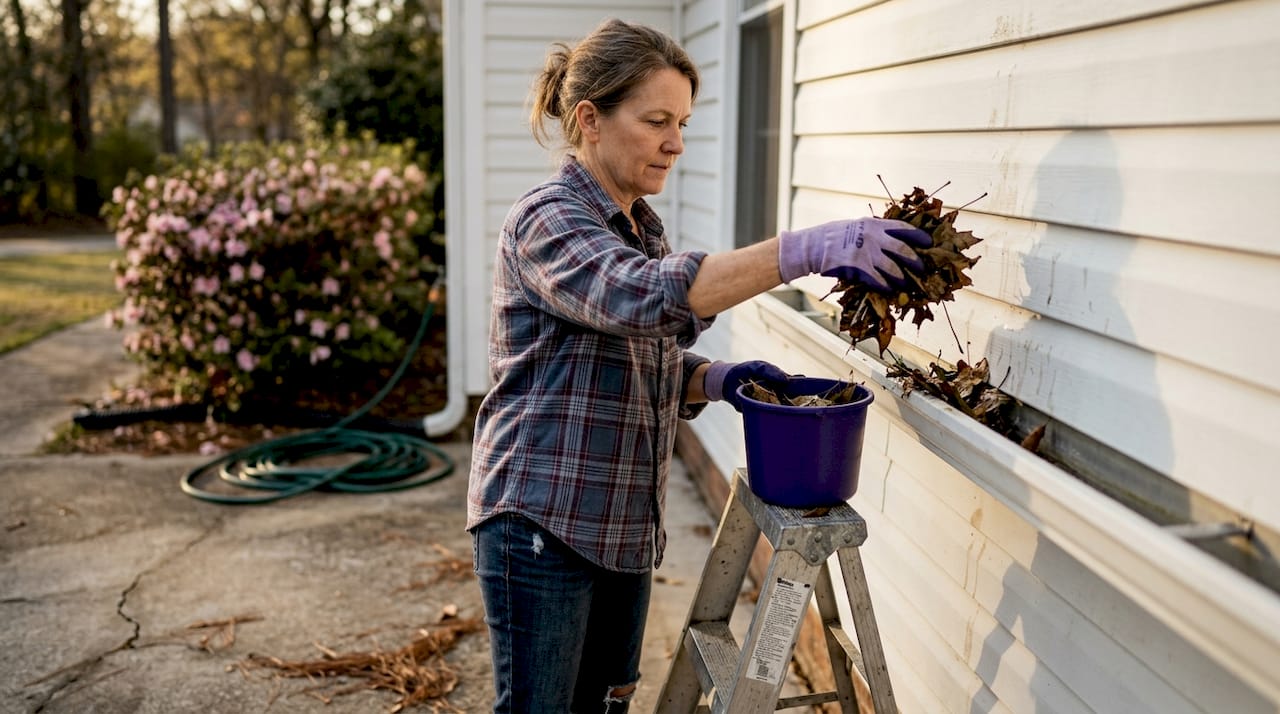
Following good roof maintenance best practices between inspections also extends the life of your roof significantly. Keeping gutters clean, trimming overhanging branches, and addressing minor repairs promptly are simple habits that make a real difference year to year.
How regular inspections preserve value and qualify for insurance
Once you know what’s covered, it’s easier to see how regular inspections directly impact your home’s value and insurance protection.
Your roof represents a significant portion of your home’s total value. Real estate appraisers and buyers pay close attention to roof condition. A well-maintained roof with a documented inspection history signals that the rest of the home has likely been cared for just as carefully. On the flip side, a roof with no maintenance records or visible deferred repairs can reduce a home’s appraised value and slow down a sale.
The financial impact of consistent inspections plays out in three key areas:
-
Repair cost control. Minor issues found early, such as a few loose shingles or a small flashing gap, cost very little to fix. The same problems left unaddressed for two or three years can lead to water intrusion, rotted decking, mold in the attic, and damaged insulation. What started as a $200 repair can become a $5,000 to $15,000 project.
-
Insurance claim readiness. North Carolina homeowners who have inspection records on file are in a far stronger position when filing storm damage claims. Post-storm documentation within 72 hours of high-wind or hail events is particularly valuable. FORTIFIED roofs, which are built to a higher standard of wind and hail resistance, show measurably lower claim frequency and severity.
-
Home resale value. Buyers and their home inspectors look closely at roofs. A home with a three to five year inspection history often commands a higher price and faces fewer negotiation challenges at closing than a home with no maintenance documentation.
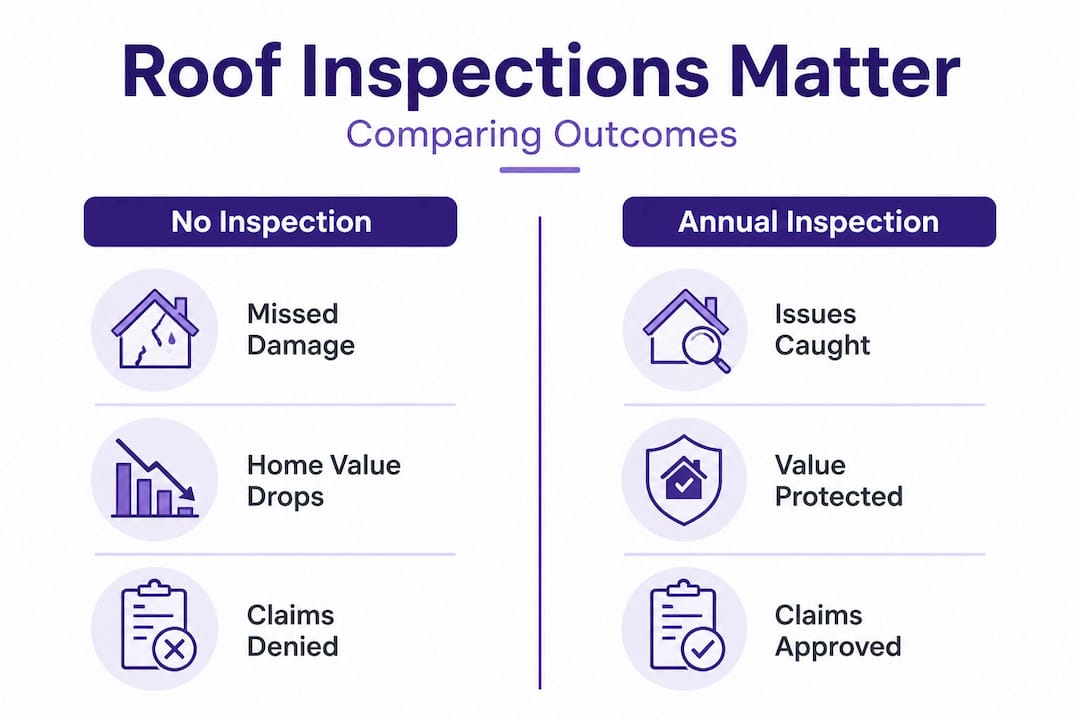
| Scenario | Without regular inspections | With regular inspections |
|---|---|---|
| Minor damage found | Often missed until costly | Caught early, repaired cheaply |
| Post-storm insurance claim | Harder to support | Well-documented, smoother process |
| Home resale condition | Unknown roof history | Clear, reassuring track record |
| Roof lifespan | Shortened by undetected issues | Extended through early intervention |
Understanding how leak repairs protect home value is a direct extension of this point. Even a slow, minor leak that goes undetected for one season can cause structural damage that far outweighs the original cost of the leak repair itself.
When and how to schedule your inspection
To get the best from an inspection, timing and execution matter. Here’s when and how to set yours up.
Timing your annual inspection well makes a real difference in what the inspector can catch and what you can act on. The most practical windows for North Carolina homeowners are spring (after winter weather clears) and fall (before storm season intensifies). Spring inspections catch any damage from ice, snow, or winter wind events. Fall inspections prepare your roof for the heaviest storm period.
Beyond the annual schedule, certain events should trigger an immediate inspection:
- Wind events where gusts exceeded 50 mph
- Any visible hail accumulation, regardless of size
- Heavy debris impact from fallen branches or limbs
- Sudden appearance of ceiling stains inside the home
- Visible shingle loss or granule accumulation in gutters
Guidance on inspection frequency points out that the NRCA considers biannual inspections ideal for maximum protection, though many NC homeowners find that a well-timed annual inspection combined with post-storm checks covers their needs effectively.
Here’s what to look for when selecting a contractor for your inspection:
- Verified local experience. Contractors who work specifically in Burlington, Greensboro, Mebane, and surrounding areas understand the local weather patterns and roofing challenges.
- Certifications and licensing. North Carolina requires roofing contractors to hold a valid license. Always verify before booking.
- Written inspection report. The report should include photos, specific findings, and recommended actions. This becomes part of your home’s maintenance record.
- Clear scope of work. Before the inspection begins, confirm what areas are included and whether the attic is part of the check.
Pro Tip: Keep every inspection report in a dedicated home maintenance folder, either physical or digital. When storm damage occurs, having two to three years of inspection records ready to share with your insurance adjuster can speed up the claims process considerably.
After a major storm, do not wait weeks to book a storm damage inspection. Demand rises quickly after severe weather, and delays in documenting damage can complicate insurance claims.
A better way to approach roof inspections: what most guides miss
Most articles on roof inspections tell you to schedule one once a year and call it done. That advice is not wrong, but it misses something important: the quality and purpose of the inspection matters just as much as the timing.
Here’s what we see regularly in the field. A homeowner books a free inspection from a company they found online. The inspector walks the property, notes a few minor items, and then presents a quote for a full roof replacement. The homeowner, understandably unsure, either agrees to repairs they may not need or dismisses the entire process as a sales pitch and never books again. Neither outcome serves the homeowner well.
The honest truth is that free inspections are often structured to generate sales leads, not to give you an accurate picture of your roof’s condition. That’s not a knock on every contractor who offers free inspections. But it is a reason to be selective and informed about who you invite onto your roof.
A paid inspection from a reputable, certified contractor gives you something different: an unbiased written report with photos and specific findings. That report has real monetary value because it supports insurance claims, helps with home sale negotiations, and gives you a maintenance roadmap for the next 12 months.
We also firmly believe that documentation is the most underused tool in a homeowner’s arsenal. NC insurance companies respond to evidence. A folder with three years of clean inspection reports, prompt post-storm documentation, and records of repairs completed tells a story that protects you financially. Homeowners who treat their roof records the way they treat their car service records consistently get better outcomes from insurance and real estate processes.
The takeaway: approach your annual inspection like a business decision, not a chore. Choose your inspector carefully, insist on written documentation, and file every report. That discipline pays off in real dollars when it matters most. Revisiting roof maintenance best practices regularly keeps you ahead of problems instead of reacting to them.
Get peace of mind with expert roof inspections
Protecting your home starts with knowing what’s actually happening on your roof right now, not after the next storm.
At All About Roofing Co., LLC, we provide thorough, documented roof inspections for homeowners across Burlington, Greensboro, Mebane, Eden, Chapel Hill, Hillsborough, Reidsville, Gibsonville, Graham, Elon, Browns Summit, and Oak Ridge, North Carolina. Our experienced team delivers written reports with photos so you always know where your roof stands. Whether you need a routine annual check or urgent storm damage solutions after high winds or hail, we respond promptly and professionally. Call us today to schedule your inspection and take the first confident step toward long-term roof protection. Your home deserves the quality care that comes from a family-owned team that genuinely stands behind its work.
Frequently asked questions
How often should roofs be inspected in North Carolina?
At minimum, schedule an annual professional inspection, preferably in spring or fall. After any storm with winds over 50 mph or visible hail, a post-storm check within 72 hours significantly strengthens your position for insurance claims.
What’s the difference between a DIY and professional roof inspection?
A DIY check from ground level gives you a limited and often incomplete view of your roof’s condition. Professional inspectors access all areas of the roof and attic, providing a detailed written report with photos that serves as official documentation.
Do insurance companies require annual roof inspections?
Annual inspections are not always a formal requirement, but having a documented inspection history makes storm damage claims smoother and supports your home’s appraised value during a sale. It is one of the strongest forms of proof you can provide.
What does a roof inspector check during an annual visit?
Inspectors evaluate shingles, flashing, gutters, vents, soffit, and fascia on the exterior, then check the attic for moisture, mold, and structural issues inside. The full scope of an inspection goes well beyond what any ground-level DIY check can realistically cover.
