


Roof installation is one of the biggest investments you’ll make as a homeowner, yet most people assume it’s as simple as slapping on some shingles and calling it done. The reality is far more involved. In North Carolina, the climate adds extra layers of complexity. From the Atlantic hurricane season to the heavy summer thunderstorms that roll through Burlington, Greensboro, and the surrounding communities, your roof faces serious demands every single year. This article covers what roof installation actually means, which materials work best for local conditions, what the process looks like from start to finish, and how to keep your roof in great shape after installation.
Table of Contents
- Understanding roof installation: What it entails
- Common roofing materials for North Carolina homes
- The roof installation process: Step-by-step
- Roof maintenance, inspections, and dealing with storm damage
- Our expert perspective: What most guides miss about roof installation
- Get help with your roof installation in North Carolina
- Frequently asked questions
Key Takeaways
| Point | Details |
|---|---|
| Roof installation includes multiple steps | Understanding the process helps avoid common mistakes and confusion during your home improvement project. |
| Material choice matters | Selecting the right roofing material affects durability, storm resistance, and maintenance requirements for North Carolina homes. |
| Maintenance is essential | Regular inspections and upkeep can extend your roof’s life and protect against costly damage. |
| Professional expertise pays off | Working with skilled installers minimizes long-term risks and ensures your roof is ready for local weather conditions. |
Understanding roof installation: What it entails
Before you can make smart decisions about your roof, you need to understand what roof installation actually means and how it differs from repairs or a replacement.
Roof installation refers to the process of placing an entirely new roofing system on a structure. This typically applies to new home builds where no previous roof exists. Roof replacement means removing your old roof and installing a completely new one in its place. You can read more about the full scope of that process in our roof replacement guidelines. Roof repair, on the other hand, addresses specific damaged sections without replacing the entire system.
Knowing the difference matters because each situation comes with different costs, timelines, and decisions. A homeowner who confuses a repair with a full replacement could either overspend or under-invest, leaving their home vulnerable.
When does roof installation become necessary?
Several situations call for full roof installation:
- New construction: Any new home requires a roof to be installed from scratch.
- Severe storm damage: When a storm destroys enough of your roof’s structural integrity, patching individual sections no longer cuts it.
- Age and wear: Most asphalt shingle roofs last 20 to 30 years. When yours reaches that age, a full installation is often the most cost-effective and reliable solution.
- Repeated leaks: If you’re constantly repairing the same areas, a new roof may cost less over time than ongoing patchwork.
North Carolina’s climate is a significant driver behind roof installation decisions. The state experiences high humidity, intense summer storms, occasional ice events in the Piedmont region, and wind events from tropical systems. These conditions accelerate wear on roofing materials and make regular assessment essential.
Main steps in a roof installation
The installation process involves far more than laying down shingles. Here is a general overview of what happens:
- Inspection and assessment of the existing structure
- Permitting and compliance with local building codes
- Removal of old materials (for replacements)
- Inspection and repair of the roof deck (the plywood base layer)
- Installation of underlayment (a moisture barrier)
- Installation of flashing around chimneys, vents, and valleys
- Application of the chosen roofing material
- Final inspection, cleanup, and debris removal
Pro Tip: Schedule your roof installation during a dry stretch, ideally spring or early fall in North Carolina. Summer brings frequent afternoon thunderstorms, and winter can cause unexpected cold snaps that affect material performance. Planning ahead prevents weather-related delays and ensures a cleaner installation.
Now that we’ve reframed what roof installation really involves, let’s look at the materials you can choose from.
Common roofing materials for North Carolina homes
Choosing the right material is one of the most important decisions you’ll make during the installation process. Your choice affects cost, lifespan, storm resistance, and how well the roof handles North Carolina’s humidity and heat.
Asphalt shingles
Asphalt shingles remain the most widely used roofing material across the state, and for good reason. They are affordable, available in a wide variety of styles and colors, and relatively easy to install and repair. You can explore the different shingle types to find an option that fits your home’s style and your budget.
There are two main types. Three-tab shingles are the traditional, budget-friendly option. Architectural shingles (also called dimensional shingles) are thicker, more durable, and carry longer warranties, often 30 years or more. For most North Carolina homeowners, architectural shingles offer the best balance of cost and performance.
Metal roofing
Metal roofing has grown significantly in popularity in the Carolinas, and it earns that attention. Metal roofs handle high winds, heavy rain, and even hail far better than standard shingles. They can last 40 to 70 years with minimal maintenance. If you live in an area that regularly sees storm activity, metal roofing is worth serious consideration.
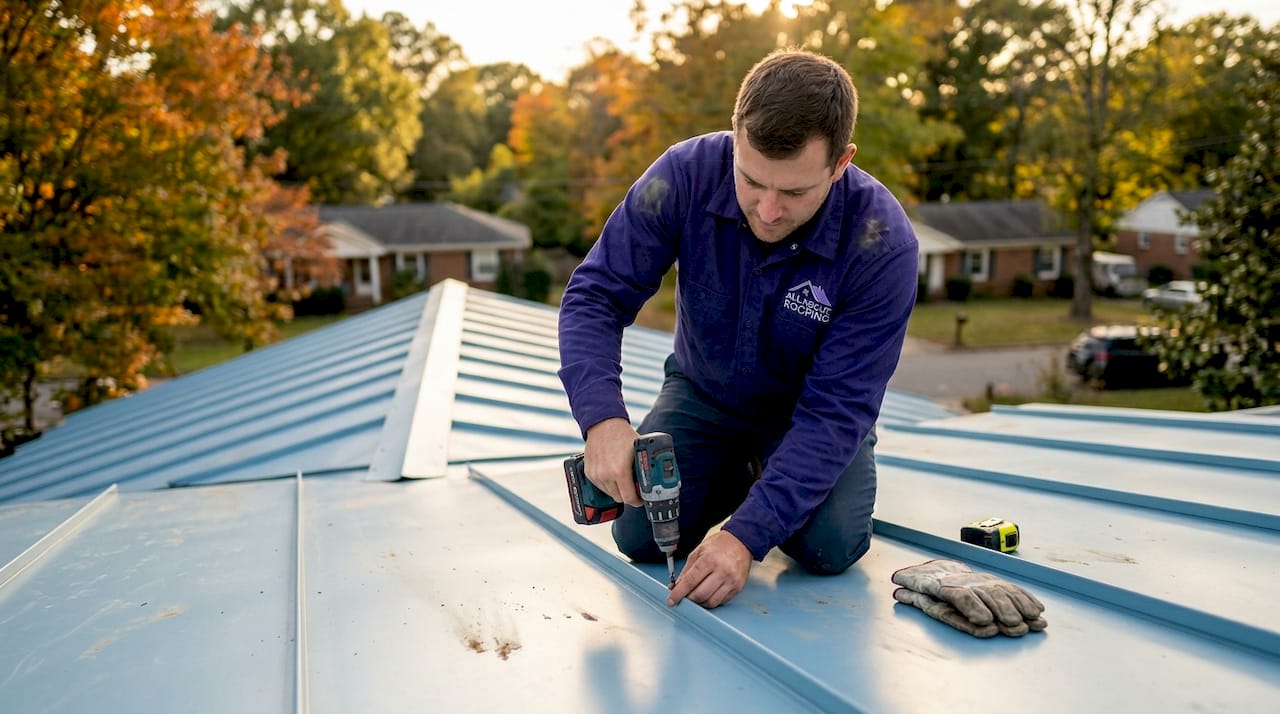
The trade-off is upfront cost. Metal roofing typically costs more to install than asphalt, but the extended lifespan and lower maintenance expenses often make it the smarter long-term investment.
Tile and other specialty materials
Tile roofing (both clay and concrete) offers excellent durability and a distinctive appearance. However, tile is heavy and requires a roof structure built to support that added weight. It is more common in certain architectural styles and tends to perform well in warmer climates. If you are curious about the full range of options available for your home, our page on roof types breaks down each material in more detail.
Material comparison table
| Material | Average lifespan | Relative cost | Storm resistance | Climate suitability |
|---|---|---|---|---|
| 3-tab asphalt shingles | 15 to 25 years | Low | Moderate | Good |
| Architectural shingles | 25 to 30 years | Moderate | Good | Very good |
| Metal roofing | 40 to 70 years | High | Excellent | Excellent |
| Clay tile | 50+ years | High | Good | Good |
| Concrete tile | 30 to 50 years | Moderate to high | Good | Good |
When evaluating materials, keep these factors in mind:
- Warranty: A longer warranty provides better protection and often signals higher quality.
- Maintenance requirements: Some materials need more frequent cleaning or inspection.
- HOA restrictions: Some neighborhoods have rules about approved roofing materials and colors.
- Energy efficiency: Lighter-colored and reflective roofing materials can reduce cooling costs during North Carolina’s hot summers.
With your material chosen, it’s important to know how the installation process unfolds.
The roof installation process: Step-by-step
Understanding what happens during installation helps you communicate better with your contractor, set accurate expectations, and catch any warning signs if something isn’t going as planned.
Step-by-step installation overview
- Initial inspection and estimate: A qualified contractor assesses your current roof, identifies any structural issues, and provides a detailed estimate covering materials, labor, and disposal fees.
- Permitting: Most North Carolina counties require a permit for roof replacement or new installation. Your contractor pulls this permit before any work begins.
- Preparation and material delivery: Shingles, underlayment, flashing, and other supplies are delivered and staged at your home, usually the day before or the morning of installation.
- Tear-off: For replacements, the old roofing material is stripped down to the roof deck. This step reveals any hidden damage in the deck itself.
- Deck inspection and repair: Any soft spots, rotted wood, or damaged sections of the plywood deck are repaired or replaced before new materials go on.
- Underlayment installation: A waterproof or water-resistant barrier (typically synthetic underlayment or felt) is applied across the entire deck to protect against moisture.
- Flashing installation: Metal flashing is applied around chimneys, skylights, vents, and roof valleys to prevent water from seeping into seams and joints.
- Roofing material application: Shingles, metal panels, or tiles are installed according to manufacturer specifications. Proper nailing patterns and overlap are critical to performance.
- Ridge cap installation: The ridge (peak) of the roof is capped with specialized materials to seal the topmost edge.
- Final inspection and cleanup: A quality contractor does a thorough walkthrough, uses a magnet to collect stray nails from the yard and driveway, and ensures the site is clean before leaving.
You can also review what a full roof replacement involves if you are comparing options for your specific situation.
Average timeline for installation stages
| Stage | Estimated time |
|---|---|
| Permitting and scheduling | 3 to 7 days |
| Material delivery and prep | 1 day |
| Tear-off (if needed) | Half a day to 1 day |
| Full installation | 1 to 2 days |
| Final inspection | 2 to 4 hours |
| Total project time | 5 to 12 days (from contract to completion) |
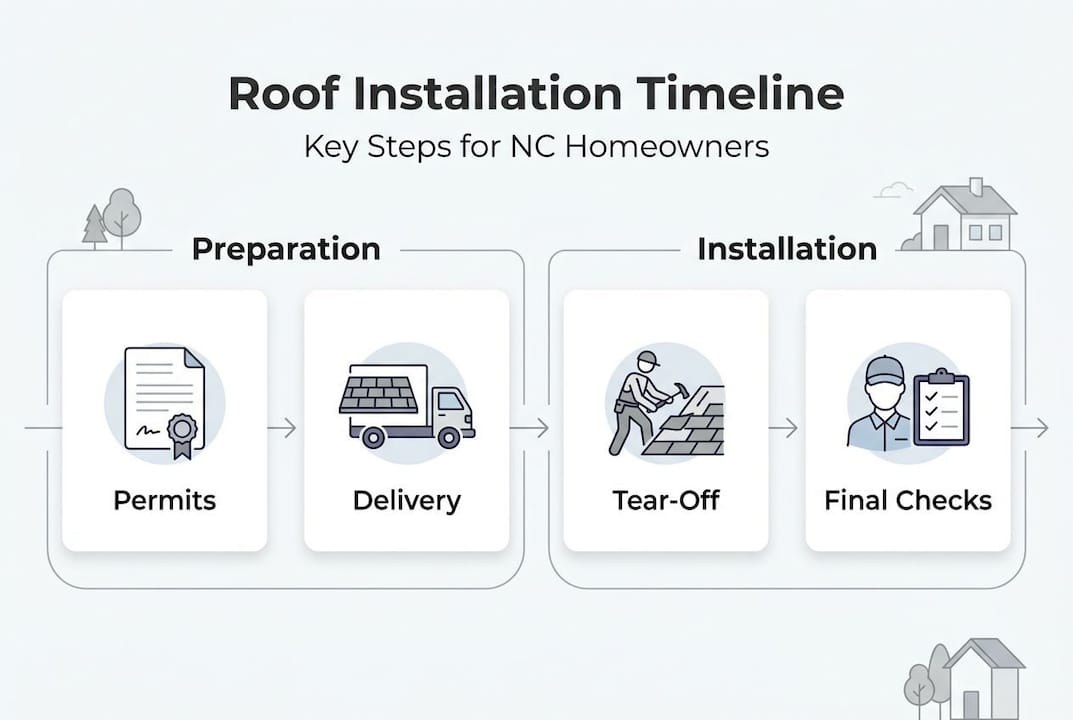
Weather is the biggest variable in North Carolina. A stretch of afternoon storms can push your timeline back, which is why scheduling with a reliable, local contractor who understands seasonal patterns makes a real difference.
After installation, maintaining your roof is key to protecting your investment.
Roof maintenance, inspections, and dealing with storm damage
A new roof is only as good as the care it receives. Consistent maintenance extends the life of your investment significantly and helps you catch small problems before they become expensive repairs.
Routine maintenance tasks
Keeping your roof in good condition involves a few regular habits:
- Clean gutters at least twice a year. Clogged gutters cause water to back up under your shingles and lead to leaks. North Carolina’s trees drop significant debris in fall and spring.
- Remove moss and algae growth. Humidity in the Piedmont and Triad regions creates ideal conditions for algae streaks on shingles. Left untreated, this breaks down shingle material over time.
- Trim overhanging branches. Trees that hang close to your roof deposit debris and scratch shingles during wind events.
- Check for visible damage after storms. Missing shingles, granule accumulation in gutters, or visible lifting at the edges are signs you need professional attention.
- Inspect attic ventilation. Poor attic airflow traps heat and moisture, shortening the life of your roof from the inside out.
For a more detailed breakdown of what to watch for, our roof maintenance tips page covers seasonal care specific to North Carolina homes.
Professional inspections matter more than you think
North Carolina’s climate is hard on roofs. Between the high humidity, UV exposure in the summer, and the regular threat of severe weather, your roof takes a beating that isn’t always visible from the ground. Professional roof inspections give you a detailed picture of where your roof stands, including areas that a homeowner simply cannot see safely or accurately.
An annual inspection allows a trained eye to catch early signs of underlayment failure, flashing separation, or deck damage before water reaches your interior. That’s a repair bill you want to avoid.
Handling storm damage
North Carolina homeowners know that severe storms are not a matter of if but when. If your home takes a hit, here is what to do:
- Document everything immediately. Take photos and videos of visible damage before any cleanup or repairs begin.
- Contact your insurance company. File a claim as soon as possible and keep all documentation.
- Call a trusted local contractor. Our roof storm damage services are specifically designed to help homeowners navigate urgent repairs quickly and correctly.
- Avoid temporary patch-and-forget approaches. Tarping is fine as a short-term stop, but permanent repairs need to happen promptly to prevent secondary damage like mold or structural rot.
- Get professional roof repairs done correctly the first time. Improper repairs after storm damage can void your manufacturer’s warranty.
Pro Tip: Schedule a professional inspection even if your roof looks fine after a storm. Hail damage, in particular, often leaves no obvious visual cues from the ground but can dramatically shorten your roof’s remaining lifespan if left unaddressed.
Managing maintenance is just one aspect. Let’s examine what most homeowners overlook when installing a new roof.
Our expert perspective: What most guides miss about roof installation
Most articles give you a material list and a cost range, then call it a day. What they don’t tell you is the part that actually costs homeowners money.
After working on roofs across Burlington, Greensboro, Mebane, and dozens of surrounding communities, we’ve seen the same pattern repeat: homeowners choose a contractor based on the lowest bid and end up paying twice. Improper flashing installation, skipped underlayment steps, and mismatched materials are the most common results of rushed or underpriced work. These aren’t small issues. Flashing failure alone accounts for a significant portion of all residential roof leaks.
North Carolina’s climate punishes shortcuts. A roof that might last 20 years in a drier climate may fail in 12 if it wasn’t installed to handle humidity, wind-driven rain, and thermal expansion. Reading our roofing reviews from local homeowners gives you a real sense of what quality installation looks like in practice.
“The biggest mistake we see is homeowners treating roof installation like a commodity purchase. In North Carolina, the details matter. The right material, properly installed, with correct ventilation and flashing, is the difference between a roof that protects your home for 30 years and one that fails in 10.”
Professional roof installation isn’t just about the materials you see from the street. It’s about everything underneath, and that’s where experience makes all the difference.
Get help with your roof installation in North Carolina
Whether you’re planning a new installation, dealing with storm damage, or wondering if your aging roof needs to be replaced, you don’t have to figure it out alone.
At All About Roofing Co., LLC, we’ve helped homeowners across Burlington, Greensboro, Mebane, Eden, Chapel Hill, Hillsborough, and the surrounding communities protect their homes with quality roofing services they can count on. If recent storms have left you concerned, our storm damage services and roof repairs team is ready to respond quickly. Need a full replacement? Our roof replacement experts will walk you through every step. Contact us today for a free estimate and let’s make sure your home is protected the right way.
Frequently asked questions
How long does roof installation take for a typical North Carolina home?
Most installations take 1 to 3 days for average-sized homes, but complex projects or weather delays can extend this timeline.
What roofing materials are best for storm-prone areas in North Carolina?
Metal roofing and impact-resistant shingles are recommended for their durability and storm protection in high-wind and heavy-rain conditions.
How often should I get my roof inspected after installation?
Professional roof inspections are recommended annually and after any severe storm to catch hidden damage early.
Can I install a new roof myself or should I hire a professional?
Professional installation is strongly recommended to avoid expensive mistakes, ensure proper material performance, and maintain your warranty coverage.
