


Keeping your roof in good shape is one of the most important things you can do as a homeowner in North Carolina. But here’s what many people don’t think about until it’s too late: the way roof work gets done matters just as much as what gets done. From steep-slope shingles to hurricane-season repairs, the safety risks on North Carolina roofs are real and specific to this region. This article walks you through what you need to know about roof safety, what equipment and standards to expect from professionals, and how to make smart decisions before anyone sets foot on your roof.
Table of Contents
- Understand your roof type and risk factors
- Critical safety equipment and best practices
- Storm-proofing and hurricane safety standards
- Checklist for hiring safe roofing professionals
- Why most homeowners underestimate roofing safety risks
- Get expert help for safer roofing in North Carolina
- Frequently asked questions
Key Takeaways
| Point | Details |
|---|---|
| Know your roof slope | Different slopes require different safety equipment and practices. |
| Use FORTIFIED standards | Applying FORTIFIED guidance can make your roof more hurricane-resistant. |
| Demand safety plans | Contractors should show insurance, equipment, and safety protocols before work starts. |
| Prioritize expert inspections | Professional inspections spot hazards homeowners often miss. |
| Storm-ready upgrades matter | Edge protection, deck sealing, and impact-rated covers protect against severe weather. |
Understand your roof type and risk factors
With a clear sense of why safety matters, let’s break down what makes your roof unique and how risk factors shape every safety decision.
The first thing any roofing professional will assess is your roof’s slope. Slope is measured as a ratio, such as 4:12, meaning the roof rises 4 inches for every 12 inches of horizontal distance. This number changes everything about how work can be safely performed.
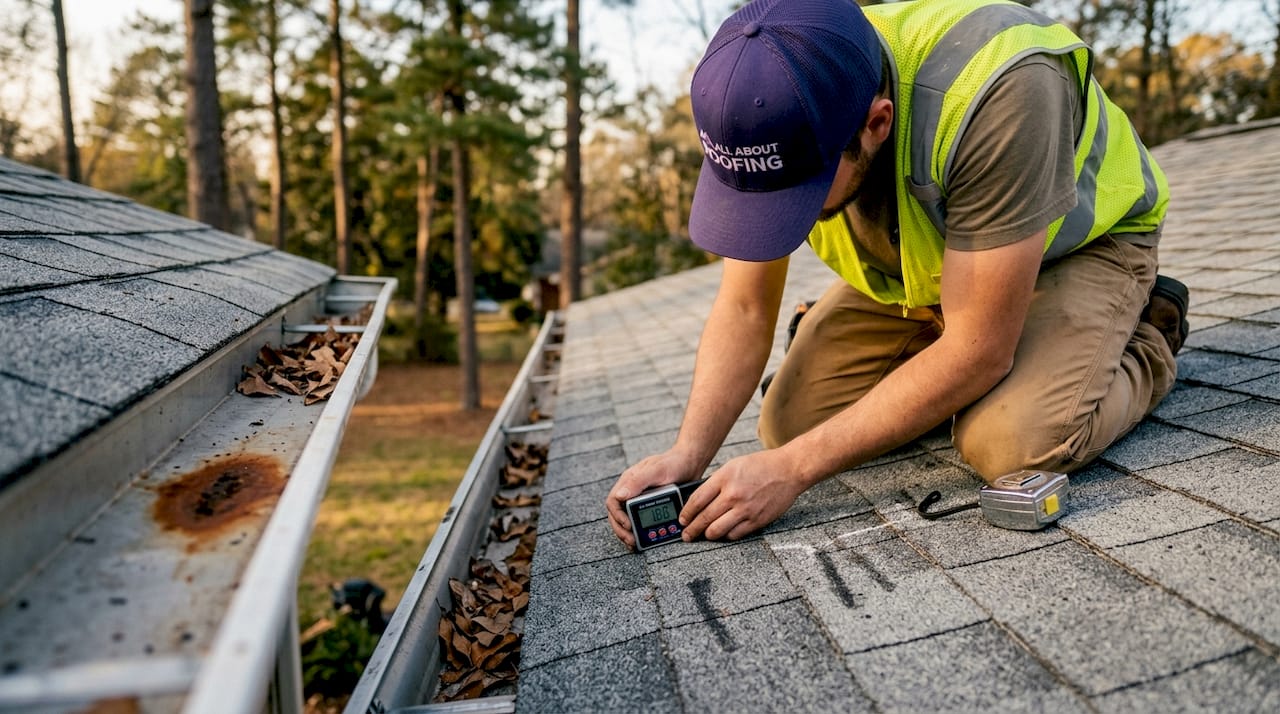
Low-slope roofs (4:12 and below) allow for a wider range of fall protection options, including warning-line systems set back a certain distance from the edge. Steep-slope roofs (above 4:12) are significantly more dangerous. Workers on these surfaces need personal fall-arrest systems, roof brackets, or scaffolding. As outlined in roofing fall protection guidance, safety choice depends on roof slope and the task, because low-slope and steep-slope fall-protection options differ considerably. You can also learn more by reviewing our roof types reference for a breakdown of the most common designs found in NC homes.
North Carolina adds another layer of complexity. The state sits in a high-wind zone, and coastal and central regions alike face hurricane threats from June through November each year. The American Society of Civil Engineers’ ASCE 7 standard sets wind load requirements for structures based on geographic location, and many North Carolina counties fall under demanding wind-speed design requirements as a result. The FORTIFIED Home program, developed by the Insurance Institute for Business and Home Safety, provides additional building guidance aimed specifically at these risks.
Common roof types in North Carolina:
- Gable roofs (very common, but more vulnerable to wind uplift)
- Hip roofs (more wind-resistant due to lower profile)
- Flat or low-slope roofs (common on older homes and additions)
- Metal roofs (growing in popularity for storm resistance)
- Asphalt shingle roofs (most widely used across the state)
| Roof slope | Classification | Recommended fall protection |
|---|---|---|
| 4:12 and below | Low-slope | Warning-line systems, safety monitors |
| Above 4:12 | Steep-slope | Personal fall-arrest, roof brackets, scaffolding |
| Above 8:12 | Very steep | Full scaffolding or aerial lifts strongly recommended |
Understanding your specific roof type before any work begins is not optional. It is the foundation of every safe roofing decision. Our detailed roof inspections guide can help you see what a thorough professional assessment covers.
Critical safety equipment and best practices
Now that you know your roof’s challenges, let’s get practical. Here’s what safety equipment and processes professionals use, and why you should expect them on your property.
Fall protection is not just a good idea. It is a legal requirement. Fall protection tops the list of OSHA’s most cited violations year after year, including 2025 data. That tells you something important: even experienced contractors sometimes cut corners. As a homeowner, you have every right to ask questions before work begins.
Essential safety equipment professionals should have on-site:
- Personal fall-arrest systems (harness, lanyard, anchor point)
- Roof brackets and toe boards on steep slopes
- Safety nets where required by job conditions
- Hard hats and non-slip footwear
- Eye protection and gloves
- Ladders in good condition, properly secured
- Guardrails or warning lines where applicable
“A roofing contractor who bristles at safety questions is a contractor who hasn’t made safety a priority. You deserve to know your home and the workers on it are protected.”
What should you actually ask before signing a contract? Start with the basics. Ask to see proof of liability insurance and workers’ compensation coverage. Then ask specifically about their fall protection plan. A good contractor will have a written safety plan that identifies the hazards on your specific roof and explains how they will be managed. This connects directly to best practices for roof repairs and ongoing roof maintenance work alike.
Pro Tip: Request a brief walkthrough of the contractor’s safety equipment before work starts. If they cannot show you a harness system, proper ladder setup, and non-slip footwear, that’s a serious red flag.
One more thing worth knowing: OSHA’s Subpart M covers fall protection for construction workers, including roofers. It sets standards for guardrail systems, safety nets, and personal fall-arrest systems. Any contractor working on your home should be familiar with these rules. Do not assume this is automatically the case.
Storm-proofing and hurricane safety standards
Beyond daily safety, North Carolina’s severe weather means homeowners need storm-specific safeguards. Here’s how to make your roof hurricane-ready.
The FORTIFIED Home Standard is one of the most practical tools available for North Carolina homeowners. Developed with high-wind and hurricane-prone regions in mind, it prescribes specific construction and retrofit requirements designed to dramatically reduce the chance of catastrophic roof failure during a storm. As detailed in the FORTIFIED Home Standard, this program addresses roof attachment, deck sealing, and impact-rated elements to protect against NC-specific high-wind and hurricane risks.
What does this actually mean for your home? Here is a step-by-step look at what FORTIFIED-compliant upgrades involve:
- Deck sealing: A sealed roof deck uses a secondary water barrier, typically a self-adhering membrane, applied to the entire deck surface. This keeps water out even if shingles are torn off during a storm.
- Stronger roof-to-wall connections: Hurricane straps or clips are used to anchor the roof structure more firmly to the walls below, reducing the risk of the entire roof system being lifted off.
- Impact-rated or pressure-rated roofing materials: Shingles and coverings must meet minimum resistance ratings for wind and impact, reducing damage from flying debris.
- Reinforced edges and drip edges: Properly installed metal drip edges protect vulnerable roof edges from wind-driven water infiltration.
- Sealed openings: Any roof penetrations, such as vents and pipe boots, must be properly sealed and rated to resist wind pressure.
| Feature | Standard construction | FORTIFIED-compliant |
|---|---|---|
| Roof deck | Unsealed plywood or OSB | Fully sealed with water barrier |
| Roof attachment | Standard nails, spaced per code | Ring-shank nails, closer spacing |
| Shingles | Basic code-minimum rating | Impact/wind-rated, Class 4 or better |
| Roof edges | Basic metal edge | Reinforced drip edge with sealant |
| Roof-to-wall connection | Standard framing ties | Hurricane clips or straps throughout |
North Carolina homeowners who invest in FORTIFIED upgrades often see insurance premium reductions in addition to improved protection. Some insurers in North Carolina offer discounts of 20% or more for FORTIFIED-certified roofs. A professional roof inspection can identify which of these upgrades your current roof may be missing and what your priorities should be heading into storm season.
Checklist for hiring safe roofing professionals
The last piece of the puzzle is ensuring the people you hire are ready and equipped. Here’s your safety-focused hiring checklist.
Hiring the right roofer takes more than finding a competitive price. Safety competence must be part of the equation. OSHA safety plans and inspection readiness are practical benchmarks for homeowners to demand from contractors, not just nice-to-haves. Using the checklist below protects both your home and the workers on it.
Before signing any contract, verify the following:
- Liability insurance: Ask for a certificate of insurance, not just a verbal confirmation. Check that coverage limits are adequate for your home’s value.
- Workers’ compensation: If a worker is injured on your property without this coverage, you could face legal liability. Do not skip this step.
- North Carolina contractor license: The NC Licensing Board for General Contractors regulates contractors. Verify the license number is active.
- Written safety plan: Ask to see a written document that identifies fall hazards specific to your roof and explains how the crew will address them.
- Safety training records: Ask how often crews receive fall protection training and whether they are OSHA 10 or OSHA 30 certified.
- Equipment inspection: Ask when their fall protection equipment was last inspected or replaced. Worn harnesses and deteriorated lanyards fail when they are needed most.
- References and reviews: Ask for recent references from local homeowners. Check roofing reviews and community forums for real feedback.
Pro Tip: A quick way to gauge a contractor’s safety culture is to ask, “What happens if one of your workers refuses to wear a harness?” Good contractors have a clear answer. They enforce safety non-negotiation policies.
For more answers to common hiring questions, our roofing FAQ covers topics ranging from material selection to timeline expectations. Doing your homework upfront saves you from costly mistakes later.
Why most homeowners underestimate roofing safety risks
Here’s a perspective we think is worth sharing directly, based on years of working with homeowners across North Carolina.
Most homeowners who skip proper safety vetting are not careless. They are simply focused on the wrong things. Price and speed dominate most roof repair conversations. “How much will it cost?” and “When can you start?” are the first two questions we hear most often. Safety almost never comes up unless the homeowner has already had a bad experience.
There’s also a widespread assumption that all licensed contractors follow all safety rules all the time. That assumption is not supported by the data. OSHA’s most-cited violations lists show fall protection failures are consistently common, even among established companies. The gap between what should happen and what actually happens on job sites is real, and it shows up in injury statistics every year.
What makes this worse is that safety failures often have no visible consequences until something goes catastrophic. A crew might work three jobs without a harness and nothing bad happens. That creates false confidence. When the accident does happen, it changes lives permanently.
The homeowners who avoid these problems are the ones who treat safety as a non-negotiable condition, not an afterthought. They ask the hard questions before the ladder goes up. They check insurance documents rather than accepting a verbal “yes, we’re covered.” They read through resources like our roofing safety blog so they know what questions to ask in the first place.
Our strong opinion: the five minutes it takes to review a contractor’s safety plan before work begins is the single highest-value action a homeowner can take. It costs nothing. It signals to the contractor that safety will be watched. And it dramatically reduces the chance of a preventable accident on your property.
Get expert help for safer roofing in North Carolina
If reading through this guide has made you realize there are gaps in how your roof has been maintained or inspected, you are not alone. Many North Carolina homeowners discover safety and structural issues only after a storm or a close call. The good news is that getting ahead of these problems is straightforward when you work with experienced local professionals.
At All About Roofing Co., LLC, our team provides thorough roof inspections designed to catch safety issues, structural vulnerabilities, and storm damage before they become major problems. We also handle storm damage repairs using materials and methods that meet or exceed FORTIFIED standards, helping your roof stand up to North Carolina’s toughest weather. And because gutters play a key role in protecting your roof’s edge and foundation, our gutter inspection services are part of a complete protection plan. We proudly serve Burlington, Greensboro, Mebane, Eden, Chapel Hill, Hillsborough, and surrounding communities. Call us today for a free estimate and let us help you protect what matters most.
Frequently asked questions
What is the safest way to work on a steep-slope roof?
Steep-slope roofs require personal fall-arrest systems, roof brackets, and often scaffolding because fall-protection options differ significantly from low-slope roofs. Warning-line-only systems are not permitted on these surfaces.
How does the FORTIFIED Home Standard improve roof safety in North Carolina?
The FORTIFIED Standard requires sealed roof decks, stronger roof-to-wall connections, and impact and pressure-rated materials to reduce hurricane and wind damage risk in high-threat regions like North Carolina.
What safety benchmarks should I ask my roofing contractor about?
Ask your contractor to show fall protection equipment, written safety plans, training records, and valid insurance before work begins. OSHA fall protection compliance is a minimum baseline, not a bonus.
Is it safe for homeowners to perform their own roof repairs?
DIY roof repairs carry serious fall and weather-related risks that most homeowners are not equipped to manage safely. Hiring trained professionals with proper equipment and safety systems is strongly recommended.
What should I do if a storm damages my roof in North Carolina?
Contact an experienced local roofer as soon as it is safe to do so and request an inspection before attempting any temporary fixes. Storm-specific safety measures and proper materials should always be part of the repair process.
