


North Carolina sits in the path of some of the most destructive storms on the East Coast. Hurricanes, tropical storms, and severe thunderstorms roll through every year, and your roof takes the full force of each one. Research shows that 50% of asphalt shingle roofs suffer damage during major hurricanes, with older roofs faring even worse. That number should stop you in your tracks. If you’ve never scheduled a professional roof inspection, or if it’s been a few years since your last one, this guide will show you exactly why that decision matters and what it could mean for your home’s safety and your wallet.
Table of Contents
- The real risks to your roof in North Carolina
- Why DIY inspections fall short
- How professional inspections protect your investment
- Understanding the professional inspection process in North Carolina
- The truth most homeowners miss about roof inspections
- Book your professional roof inspection in North Carolina
- Frequently asked questions
Key Takeaways
| Point | Details |
|---|---|
| Storm risk is real | Homes in North Carolina face high risk of roof damage from hurricanes and severe weather. |
| Expertise beats DIY | Professional inspections catch issues homeowners often miss and ensure code compliance. |
| Invest in prevention | Early detection and repairs save money, support insurance claims, and maintain home value. |
| Choose local pros | Licensed local contractors understand North Carolina codes and provide peace of mind after storms. |
The real risks to your roof in North Carolina
North Carolina homeowners face a unique combination of weather threats. Hurricanes track up the coast and push inland. Severe thunderstorms bring damaging winds and hail. Even winter ice storms can crack and loosen shingles that were already weakened by summer heat. Your roof is the first line of defense against all of it, and the damage it absorbs often goes unnoticed until water is dripping through your ceiling.
Storm damage by the numbers
The data on roof performance during major storms is eye-opening. Studies on roof cover damage show that asphalt shingles sustain roughly 50% damage rates in hurricanes, while metal roofing holds up far better at only 12% damage. That’s a dramatic difference, and it tells you a lot about why material choice and maintenance both matter.
| Roof Material | Hurricane Damage Rate | Key Vulnerability |
|---|---|---|
| Asphalt shingles | ~50% | Wind uplift, granule loss |
| Metal roofing | ~12% | Fastener failure, seam gaps |
| Wood shake | ~40% | Splitting, moisture absorption |
| Tile (clay/concrete) | ~25% | Impact cracking, broken fasteners |
Older roofs carry even more risk. A roof that’s more than 10 years old has likely experienced years of UV exposure, thermal expansion, and moisture cycling. Those factors weaken adhesive strips, dry out flashing sealants, and cause shingles to curl or crack. When the next storm hits, those weak points become entry points for water.
The common types of roof storm damage risks you’ll see in North Carolina include:
- Missing or lifted shingles from high wind events
- Hail impact bruising that cracks the shingle mat beneath the surface
- Damaged or displaced flashing around chimneys, vents, and skylights
- Clogged or bent gutters that push water back under the roof edge
- Soffit and fascia damage from wind-driven rain
- Granule loss that accelerates shingle aging and reduces UV protection
“Water intrusion doesn’t always announce itself with a dramatic leak. It often starts as a slow seep behind walls or in the attic, where mold can grow for months before you notice any signs inside your home.”
That hidden moisture is one of the most costly consequences of a damaged roof. Mold remediation in a North Carolina attic can run thousands of dollars, and it’s entirely preventable with timely inspections and repairs.
Why DIY inspections fall short
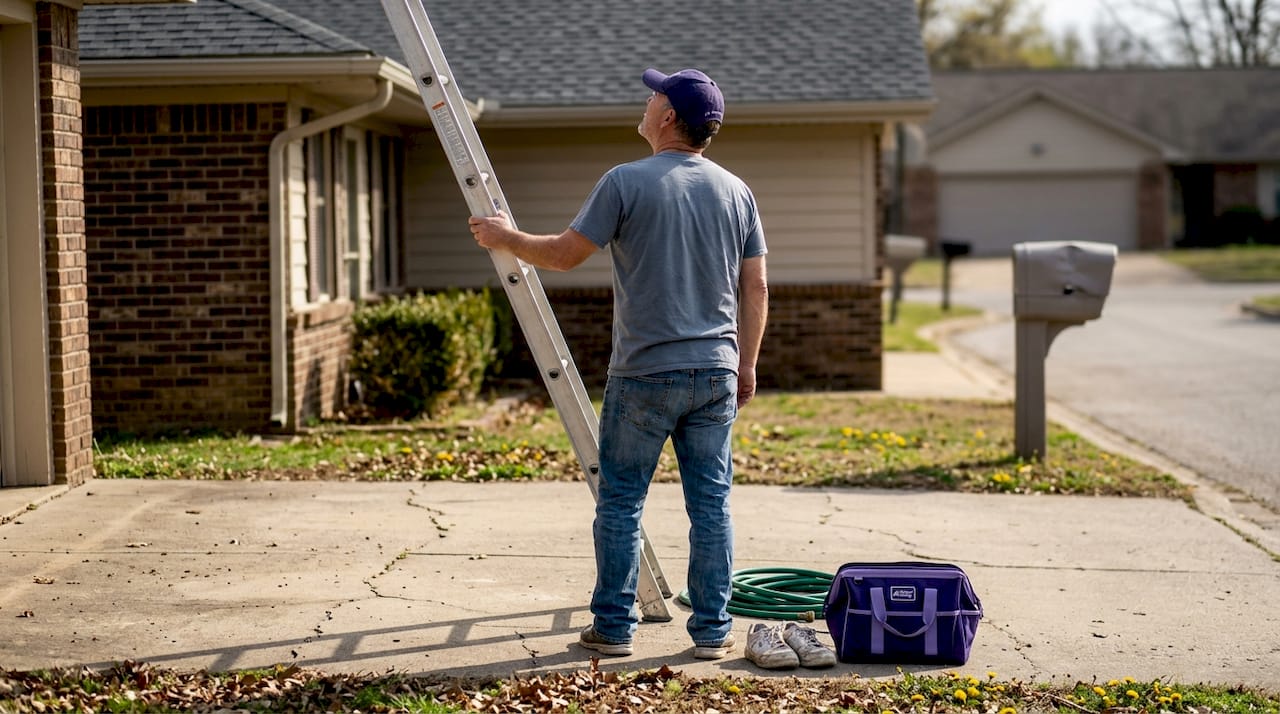
It’s tempting to grab a ladder, peek at your roof from the edge, and call it done. Most homeowners do exactly that. But a quick visual scan from the ground, or even from the roof itself, misses the issues that cause the most damage over time.
What you’re likely to miss
Homeowners typically look for obvious problems: missing shingles, visible holes, or sagging sections. Those are the extreme cases. What you won’t see without training and the right tools are things like micro-cracks in flashing sealant, early-stage granule loss on shingles, improper attic ventilation, or subtle signs of structural deck movement. These are the problems that quietly worsen between storms.
Here’s a comparison of what a homeowner check versus a professional inspection typically covers:
| Inspection Area | Homeowner Check | Professional Inspection |
|---|---|---|
| Shingle condition | Surface visible damage only | Granule loss, adhesion, age assessment |
| Flashing integrity | Visual gaps only | Sealant condition, code compliance (IRC R903) |
| Attic ventilation | Rarely checked | Airflow measurement, IRC R806 compliance |
| Structural deck | Not accessible | Soft spots, moisture damage, movement |
| Gutters and drainage | Obvious clogs | Pitch, fastener condition, downspout flow |
| Insurance documentation | None | Detailed written report with photos |
Professionals also understand what insurance adjusters need to approve a claim. A handwritten note saying “shingles look bad” won’t get you far. A detailed inspection report with photographs, measurements, and references to building code violations is what moves a claim forward.
Code compliance is not optional
Licensed inspectors check your roof against current building codes, including IRC R903 flashing standards and IRC R806 ventilation requirements. These aren’t just bureaucratic checkboxes. Improper flashing is one of the leading causes of water intrusion, and poor ventilation accelerates shingle aging and can void manufacturer warranties.
- Verify all flashing is properly sealed and fastened per IRC R903
- Confirm attic ventilation meets IRC R806 airflow ratios
- Check that all penetrations (vents, pipes, skylights) are properly sealed
- Assess whether previous repairs were done to code
- Document any conditions that could affect insurance coverage
Pro Tip: Always ask your inspector if they are licensed in North Carolina. State law requires a contractor’s license for roofing work exceeding $30,000, and working with unlicensed contractors puts you at legal and financial risk if something goes wrong.
One group to watch out for is storm chasers. These are out-of-state contractors who flood into North Carolina after major storms, offering quick repairs at low prices. They often lack proper licensing, use substandard materials, and disappear before problems surface. A professional roof inspection process from a local, licensed company protects you from those risks.
How professional inspections protect your investment
A professional inspection is not just about finding damage. It’s about protecting the long-term value of your home and giving you the documentation you need when it counts most.
Catching problems early saves real money
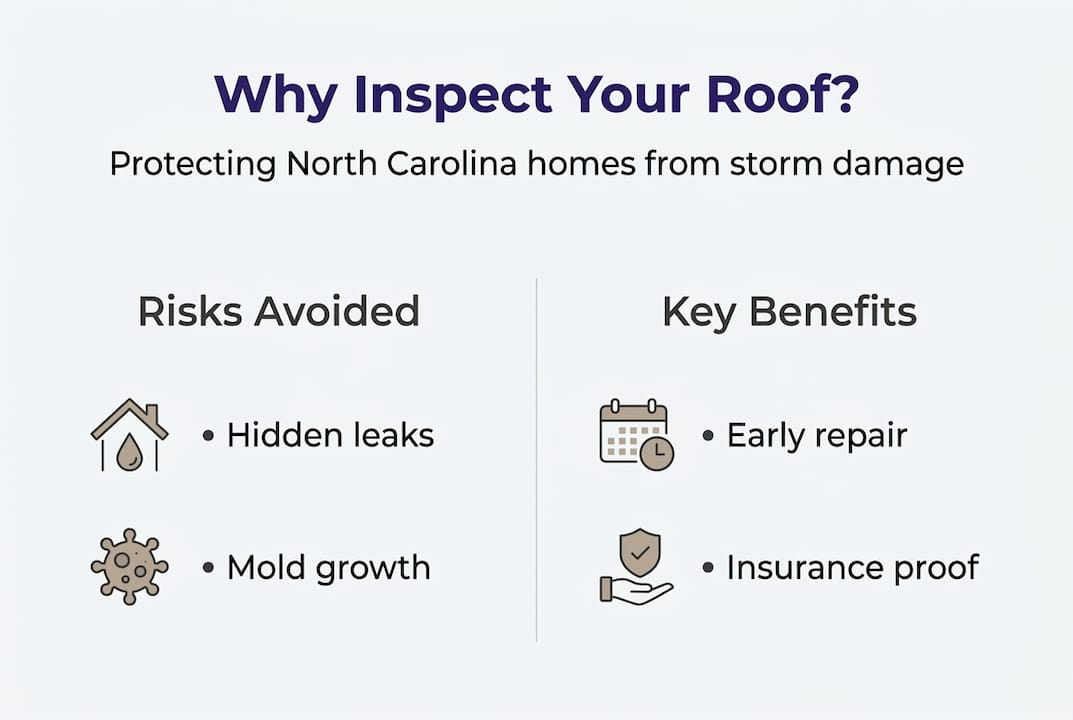
Small issues become expensive problems fast. A cracked piece of flashing that costs $150 to fix today can lead to $5,000 in water damage if left alone through a wet North Carolina fall. Professional inspectors are trained to catch those early-stage issues before they escalate. They know where to look, what warning signs to watch for, and how to distinguish normal wear from active damage.
Here’s what a thorough professional inspection protects you from:
- Premature shingle failure from undetected granule loss or adhesion problems
- Structural rot caused by slow moisture intrusion through damaged flashing
- Mold growth in attic spaces from poor ventilation or minor leaks
- Voided warranties from improper repairs or code violations
- Denied insurance claims from lack of professional documentation
- Reduced home value from deferred maintenance that shows up in a buyer’s inspection
The deck sealing advantage
One of the most impactful things a professional can identify and recommend is proper roof deck sealing. Research shows that sealing the roof deck reduces water intrusion by up to 95% during storm events. That’s not a minor improvement. That’s the difference between a dry attic and a gutted one after a hurricane passes through.
Key stat: Properly sealed roof decks reduce storm-related water intrusion by up to 95%.
Professionals can assess whether your current underlayment and deck sealing meet that standard, and they can recommend upgrades that significantly improve your home’s storm resilience. You can also explore roof maintenance tips to understand what ongoing care looks like between inspections.
Documentation that works for you
When you file an insurance claim after a storm, the insurer will send their own adjuster. Having an independent professional inspection report in hand before that meeting gives you a factual baseline. It shows the pre-storm condition of your roof, documents any new damage, and supports your claim with photographs and written assessments. Homeowners who have professional documentation consistently report smoother and faster claims experiences.
Understanding the professional inspection process in North Carolina
Knowing what to expect during an inspection helps you prepare and ask the right questions. A professional inspection in North Carolina typically follows a structured process that covers every critical component of your roof system.
Step-by-step walkthrough
- Initial consultation and history review. Your inspector will ask about the age of your roof, any past repairs, recent storm events, and any interior signs of leaks or moisture.
- Exterior inspection from the ground. Using binoculars or a drone, the inspector scans for obvious damage, sagging, missing shingles, and gutter condition before getting on the roof.
- Hands-on roof surface inspection. The inspector walks the roof to check shingle adhesion, granule loss, flashing condition, ridge caps, and any penetrations like vents or skylights.
- Flashing and sealant assessment. Every transition point, including chimney bases, valleys, and pipe boots, is checked for proper sealing and code compliance.
- Gutter and drainage inspection. Your inspector checks gutter inspection checks for proper pitch, secure fastening, and clear downspout flow to ensure water is directed away from your foundation.
- Chimney and attic review. A thorough inspection includes chimney inspection steps to check for cracked mortar, damaged caps, and proper flashing, as well as an attic check for ventilation, moisture, and insulation condition.
- Written report delivery. You receive a detailed written report with photographs, findings, and recommended repairs, prioritized by urgency.
After a major storm
Post-storm inspections follow the same process but with extra attention to impact damage, wind uplift patterns, and any areas where debris may have struck the roof. Inspectors also document the date and nature of the storm event, which is critical for insurance claims.
“In North Carolina, roofing contractors performing work valued at over $30,000 must hold a valid state contractor’s license. Always verify your inspector’s credentials before signing any agreement.” (National Roofing Authority)
Questions to ask your inspector
Before your inspector leaves, make sure you ask these questions:
- Is your company licensed and insured in North Carolina?
- What specific code issues, if any, did you find?
- Which repairs are urgent versus preventive?
- Can you provide a written estimate for any recommended work?
- Will your report include photos suitable for an insurance claim?
Getting clear answers to these questions ensures you walk away with a complete picture of your roof’s condition and a plan for moving forward.
The truth most homeowners miss about roof inspections
Here’s something we’ve seen repeatedly after years of serving homeowners across Burlington, Greensboro, and the surrounding communities: most people skip inspections not because they don’t care, but because they assume no visible damage means no real damage. That assumption is where things go wrong.
The real cost of skipping an inspection isn’t the inspection fee. It’s the insurance claim that gets denied because there’s no documentation. It’s the mold remediation bill that arrives six months after a slow leak started in the attic. It’s the roof replacement that could have been a simple repair if caught two seasons earlier.
We’ve also seen homeowners who had storm damage that qualified for insurance coverage, but because they waited too long or used an unlicensed contractor for a quick patch, the insurer denied the claim entirely. Professional inspections create a record. That record is your protection.
The stories we hear most often from our customers are about peace of mind. After a major storm passes, not knowing the condition of your roof is its own kind of stress. A professional inspection gives you a clear answer, and if repairs are needed, it gives you a path forward. You can read more about real maintenance stories from homeowners who caught problems early and saved significantly on long-term repair costs.
Inspections are not an expense. They are the most cost-effective tool you have for protecting one of your largest investments.
Book your professional roof inspection in North Carolina
Your roof works hard every day to protect your home, and it deserves the same attention you’d give any other major system in your house.
At All About Roofing Co., LLC, we make it easy to schedule your inspection online or by phone. Our licensed team serves Burlington, Greensboro, Mebane, Chapel Hill, Hillsborough, Reidsville, Gibsonville, Graham, Elon, Browns Summit, Oak Ridge, and Eden. If you’ve recently experienced a storm, don’t wait. Request a storm damage inspection right away to document any damage before it worsens. And if repairs are needed, our roof repair services get your home back to full protection quickly. Call us today for a free estimate and let our experienced team give you the peace of mind you deserve.
Frequently asked questions
How often should I schedule a professional roof inspection?
Most experts recommend an annual inspection, plus an additional check after any major storm event for North Carolina homes. Homes with roofs older than 10 years benefit most from twice-yearly reviews.
Does my insurance require a professional inspection after a storm?
Some insurers require professional documentation to process roof damage claims after a storm. Having an independent inspection report ready before the adjuster visit strengthens your claim significantly.
What is checked during a roof inspection in North Carolina?
Professional inspectors check shingles, flashing, ventilation, gutters, and chimneys for code compliance and storm damage, covering both IRC R903 flashing standards and IRC R806 ventilation requirements.
What roof material stands up best to hurricanes?
Metal roofs suffer only about 12% damage compared to roughly 50% for asphalt shingles in major hurricanes, making metal a significantly more storm-resistant option for North Carolina homeowners.
