


Roof leaks cost American homeowners billions every year, and North Carolina is no exception. U.S. roof claims reached over $31 billion in 2024, and a significant portion of those losses came from homes where small leaks were left unaddressed. If you’ve noticed a water stain on your ceiling or a drip after a heavy rain, the clock is already ticking. Waiting even a few weeks can turn a minor repair into a major expense. This guide gives you the expert advice you need to understand roof leaks, protect your property value, and make the right call before the damage gets worse.
Table of Contents
- Understanding roof leaks and their causes
- How roof leaks affect your home and wallet
- Why timely roof leak repair matters
- Hiring experts versus DIY: what North Carolina homeowners should know
- Our expert take: why roof leak repair is more urgent than you think
- Get help from North Carolina’s trusted roof experts
- Frequently asked questions
Key Takeaways
| Point | Details |
|---|---|
| Urgency is crucial | Prompt leak repairs minimize damage and keep repair costs manageable. |
| Local risks are high | North Carolina storms increase roof leak risk, demanding vigilant maintenance. |
| Professional help pays off | Expert repairs offer safety, quality, and extended roof lifespan for NC homes. |
| Damages affect value | Untreated roof leaks can reduce your property’s resale value and curb appeal. |
Understanding roof leaks and their causes
Not every roof leak announces itself with a dramatic drip. Many start as tiny gaps around flashing, worn shingles, or clogged gutters, and they quietly cause damage for months before you notice anything inside your home. Knowing what causes leaks puts you in a much stronger position to catch them early.
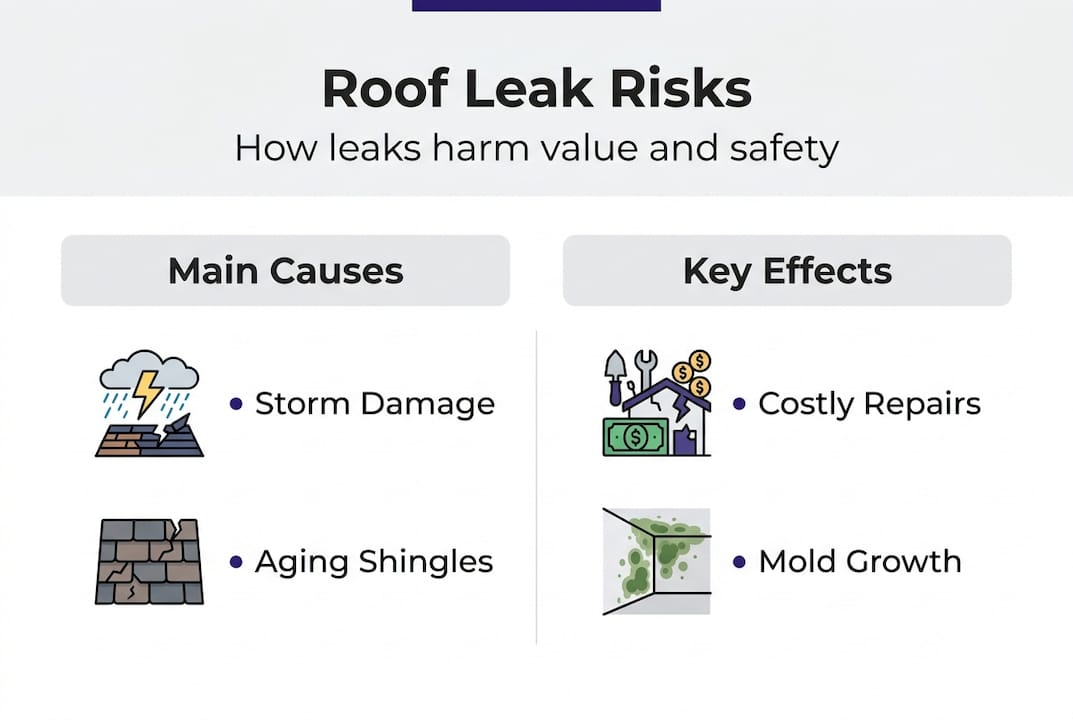
The most common causes of roof leaks include:
- Aging roofing materials: Asphalt shingles typically last 20 to 30 years. As they age, they crack, curl, and lose their protective granules, leaving your roof vulnerable.
- Storm damage: High winds, hail, and heavy rain can lift shingles, crack tiles, or force water under flashing in a single storm event.
- Poor installation: Improperly sealed valleys, loose flashing around chimneys, or incorrectly layered underlayment can create entry points for water from day one.
- Clogged gutters: When gutters back up, water pools along the roofline and seeps under shingles, especially during prolonged rain.
- Damaged or missing flashing: Flashing is the thin metal that seals joints around chimneys, vents, and skylights. When it corrodes or pulls away, water gets in fast.
North Carolina’s climate makes all of these risks worse. The state sees frequent thunderstorms, tropical storms, and occasional ice events that stress roofing systems year-round. The storm damage risks here are genuinely higher than in many other parts of the country, and NC storm volatility directly drives up roof claim costs for homeowners. Even areas like Chapel Hill that feel relatively sheltered experience significant weather impact from seasonal storms.
Pro Tip: After any major storm, walk around your home and look for missing shingles, granules collecting in your gutters, or visible dents on metal flashing. Catching these signs early can save you thousands.
Early identification is everything. A roof that gets inspected and repaired promptly after storm season will outlast one that’s left alone by years.
How roof leaks affect your home and wallet
Once you understand what causes leaks, it’s essential to know how their effects can snowball, financially and structurally. A leak that starts as a minor inconvenience can become a serious threat to your home’s integrity and your family’s health.
Unchecked leaks damage more than just your ceiling. Water works its way into insulation, reducing its effectiveness and driving up your energy bills. It soaks into wooden framing and roof decking, causing rot that weakens the structure of your home. Over time, that moisture creates the perfect environment for mold growth, which poses real health risks, especially for children and anyone with respiratory conditions.
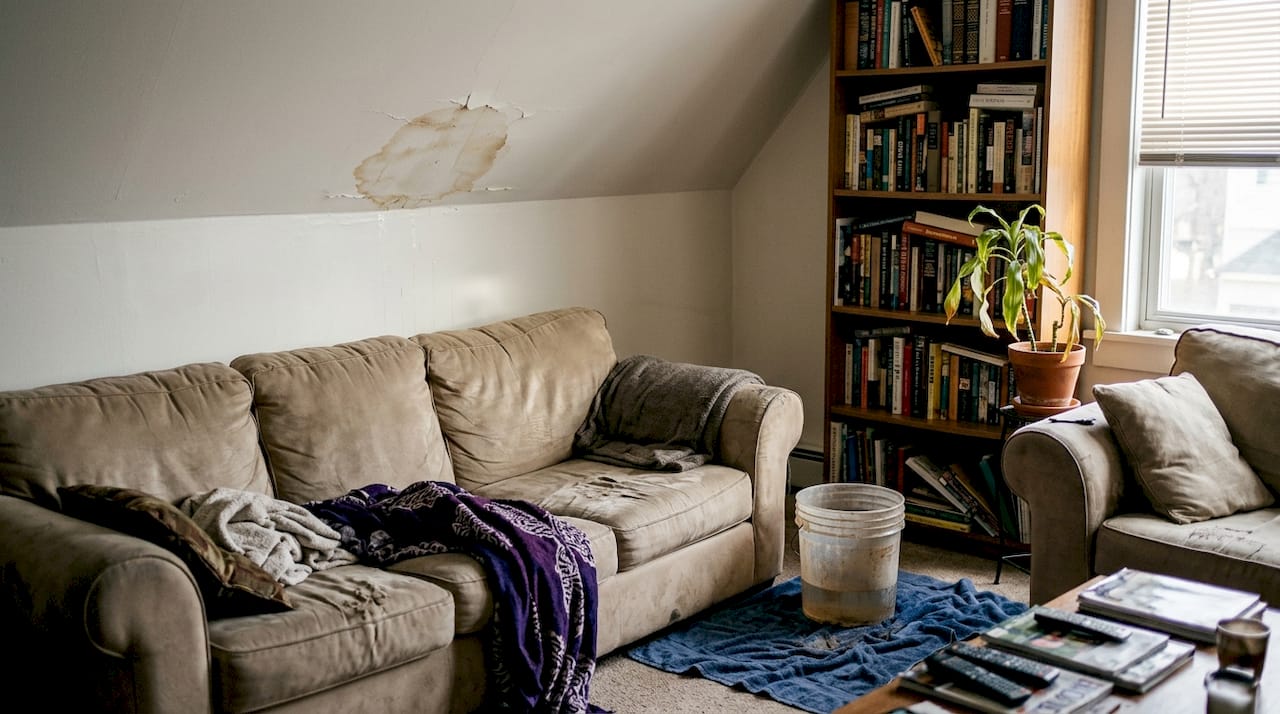
Here’s a quick look at how leak severity affects repair costs:
| Leak severity | Typical repair cost | Potential additional damage |
|---|---|---|
| Minor (small gap, early catch) | $150 to $400 | Minimal, surface-level |
| Moderate (water staining, some rot) | $400 to $1,500 | Insulation, drywall |
| Severe (structural rot, mold) | $1,500 to $8,000+ | Framing, health hazards |
The financial impact goes beyond repair bills. Homes with known roof problems sell for less. Buyers either walk away or negotiate aggressively once an inspection reveals water damage. Poor roof conditions lead to 60% higher loss costs compared to well-maintained roofs, which tells you everything about how much a neglected leak can cost you in the long run.
The health consequences deserve serious attention too. Mold can develop within 24 to 48 hours of water intrusion. Once it spreads into walls and insulation, remediation becomes expensive and disruptive. Investing in repair solutions early is far less painful than dealing with a full mold remediation project.
Key financial risks of ignoring roof leaks:
- Increased insurance premiums or denied claims
- Reduced home resale value
- Costly mold remediation
- Higher energy bills from damaged insulation
- Emergency repair costs after major storms
Staying on top of roof maintenance is the most cost-effective strategy any North Carolina homeowner can follow.
Why timely roof leak repair matters
Preventing major damage starts with understanding why timely repairs are far more effective than waiting. The difference between acting now and acting later is not just a matter of convenience. It’s often a matter of thousands of dollars.
Consider how immediate versus delayed repairs compare:
| Repair timing | Average cost | Long-term outcome |
|---|---|---|
| Immediate (within 1 to 2 weeks) | $150 to $600 | Minimal damage, roof life preserved |
| Delayed (1 to 3 months) | $600 to $2,500 | Insulation loss, possible mold |
| Severely delayed (6+ months) | $2,500 to $10,000+ | Structural damage, major claims |
The numbers are clear: U.S. roof claims hit $31 billion in 2024, and a large share of those costs came from damage that could have been prevented with prompt repairs.
If you suspect a leak, here’s what to do right now:
- Document the damage. Take photos of any water stains, wet insulation, or visible roof damage. This helps with insurance claims and repair estimates.
- Check your attic. Look for daylight coming through the roof boards, damp insulation, or dark staining on wood surfaces.
- Clear your gutters. Blocked gutters can worsen an existing leak significantly during the next rain event.
- Schedule a professional inspection. A trained roofer can identify problems you can’t see from the ground. The inspection benefits go well beyond what a visual check from the yard can reveal.
- Act before the next storm season. North Carolina storm seasons don’t give you much warning. Getting repairs done in advance is always the smarter move.
Key stat: Homes with well-maintained roofs see dramatically lower insurance loss costs compared to homes with deferred maintenance. That gap grows every month you wait.
Timely action protects your investment, keeps your family safe, and gives you peace of mind heading into every storm season.
Hiring experts versus DIY: what North Carolina homeowners should know
With urgency established, let’s look at whether to tackle repairs yourself or trust proven local professionals. This is a question we hear often, and the honest answer depends on the size of the problem and your comfort level with heights and roofing materials.
DIY repairs can work for:
- Replacing one or two missing shingles
- Applying roofing caulk around small flashing gaps
- Cleaning gutters to prevent water backup
- Sealing minor nail pops on low-slope sections
Professional repair is the right call when:
- The leak source isn’t obvious from inside the attic
- You see signs of rot, mold, or structural softness
- The damage involves flashing around a chimney or skylight
- Your roof is steep or more than one story high
- You want the repair to hold up through NC’s storm season
Local expertise matters more than most homeowners realize. A roofer who knows North Carolina’s specific weather patterns, common roofing materials used in the region, and the building codes that apply here will deliver a more reliable repair than a general handyman or an out-of-state contractor. Professional inspection ensures reliable repairs and a longer roof life, which is exactly what you need in a state where the weather can shift dramatically in 24 hours.
Safety is also a real concern. Falls from roofs are one of the leading causes of serious injury for homeowners attempting DIY repairs. If you’re not experienced with roof work, the risk simply isn’t worth it. Issues like chimney leak repairs and shingle roof work require specialized knowledge that goes well beyond basic home repair skills.
Pro Tip: Always ask your roofing contractor for a written warranty on both materials and labor. A quality roofer stands behind their work, and that guarantee protects you if the repair doesn’t hold through the next storm.
Our expert take: why roof leak repair is more urgent than you think
After years of servicing North Carolina homes, we’ve seen a pattern that surprises most homeowners. The leaks that cause the most damage are rarely the dramatic ones. They’re the small drips that homeowners decide to monitor, the stains they plan to check after the next rain, and the flashing gaps they mean to caulk when the weather warms up.
Conventional wisdom says you have time to evaluate before acting. We disagree. North Carolina’s storm volatility means a small gap can become a major breach overnight. NC storm volatility makes delays especially costly, and we’ve seen firsthand how a $300 repair turns into a $4,000 project because a homeowner waited two months.
Our advice is simple: treat every leak as urgent. Even if it looks minor, get it assessed by a professional before the next storm rolls through. The roof repair lessons we’ve learned from thousands of jobs in Burlington, Greensboro, and across the region all point to the same truth. Acting fast is always the right move.
Get help from North Carolina’s trusted roof experts
If you’ve spotted a leak or just want to know the condition of your roof before storm season hits, we’re here to help. At All About Roofing Co., LLC, we’ve built our reputation on honest assessments, quality repairs, and standing behind every job we complete.
Our team understands North Carolina’s weather challenges and knows exactly what your roof needs to hold up through it. Whether you need targeted roof repairs, help after a storm from our storm damage experts, or want to explore roof replacement options, we’ve got you covered. We serve Burlington, Greensboro, Chapel Hill, Mebane, and communities across the region. Call us today for a free estimate and get the peace of mind your home deserves.
Frequently asked questions
How quickly should I repair a roof leak in North Carolina?
Roof leaks should be repaired as soon as possible, ideally within days of discovery. NC storms can rapidly worsen existing damage, turning a minor repair into a major expense overnight.
Can I fix roof leaks myself or should I hire a professional?
Small surface leaks can sometimes be patched by a careful homeowner, but professional repairs extend roof life and prevent the repeated costs that come from incomplete fixes.
How do roof leaks affect home resale value?
Roof leaks can significantly reduce your home’s resale value by causing structural and cosmetic damage that makes buyers nervous. Roof leaks lower property value and escalate repair expenses the longer they go unaddressed.
Are roof leaks common in North Carolina?
Yes, North Carolina’s frequent storms make roof leaks a common and costly problem for homeowners across the state. NC storms drive higher roof leak risk and claim costs compared to many other regions.
