


Your roof is one of the most important parts of your home, but it’s also one of the most overlooked. Many homeowners assume their roof will last indefinitely with minimal attention, only to discover leaks, structural damage, or mold after the problems have already grown costly. The truth is, waiting too long to replace an aging or damaged roof puts your entire home at risk. This guide will help you identify the signs of roof failure, understand the real financial consequences of delay, and make a confident decision about when replacement is the right choice for your home.
Table of Contents
- How to spot the signs you need a new roof
- Why prompt roof replacement protects your home (and wallet)
- How a new roof increases your home’s value and curb appeal
- Repair or replace? Making the smartest decision for your roof
- A roofing pro’s take: The real reason to replace your roof before it fails
- Get trusted help for roof replacement in North Carolina’s Triad
- Frequently asked questions
Key Takeaways
| Point | Details |
|---|---|
| Watch for replacement signals | Missing shingles, old age, or recurring leaks often mean it’s time for a new roof. |
| Delay leads to bigger costs | Waiting to replace your roof can cause major damage and higher expenses down the road. |
| New roofs boost value | A roof replacement improves both curb appeal and resale prospects for your home. |
| Professional advice matters | A roofing expert can tell you whether repair or replacement is the smarter investment. |
How to spot the signs you need a new roof
Not all roofing problems are obvious. Some of the most serious issues develop slowly over months or even years, hiding beneath shingles or inside your attic where you can’t easily see them. Knowing what to look for helps you catch problems early, before they turn into major expenses.
Here are the most common warning signs that your roof may need replacement rather than just a simple repair:
- Missing or curling shingles: Shingles that are lifting at the edges, cracking, or completely gone are a clear sign the roof is failing. This often happens when materials have aged past their useful life.
- Granule loss: Asphalt shingles are coated with protective granules. When you notice them collecting in your gutters or on the ground around your home, your shingles are deteriorating and losing their ability to protect against UV rays and moisture.
- Daylight visible in the attic: If you can see natural light coming through your attic ceiling boards, water can get through too. This is a serious sign that replacement may be urgent.
- Active or recurring leaks: A single leak after a major storm might be a repair situation. But if leaks keep coming back, even after patches, the underlying structure is compromised.
- Sagging roof deck: A drooping or sagging section of your roof indicates structural damage, often caused by long-term moisture exposure. This is not a repair situation. This requires immediate professional attention.
- Moss or algae growth: Persistent green or black streaking can signal trapped moisture, which deteriorates shingles over time.
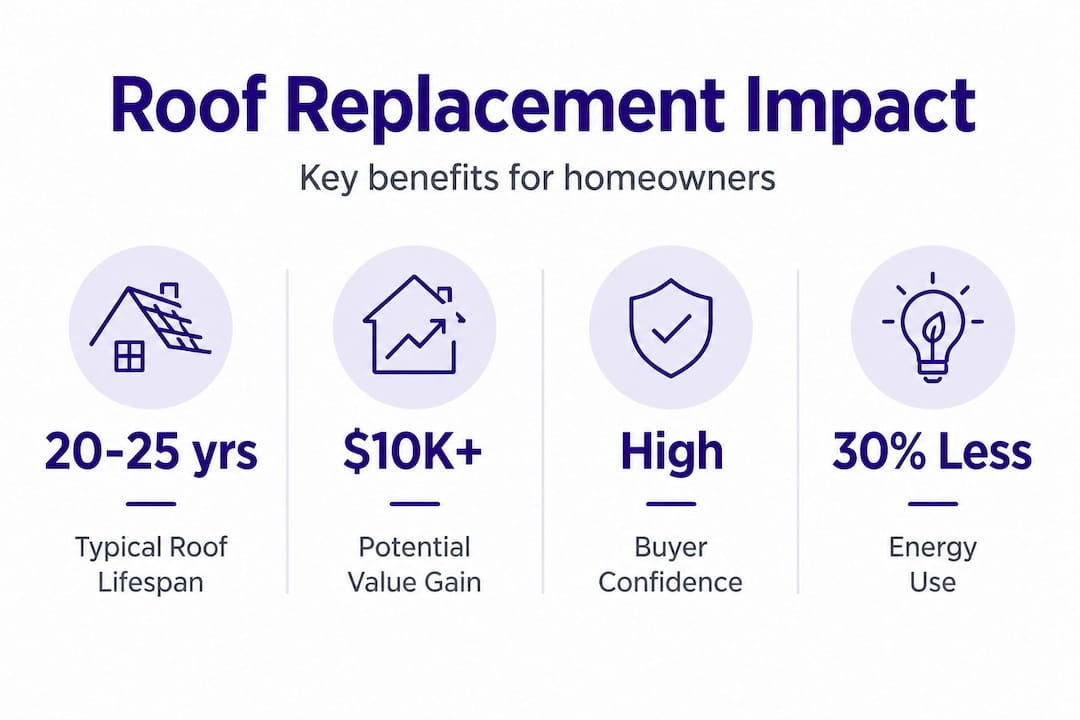
In North Carolina’s Triad region, most asphalt shingle roofs last between 20 and 25 years under normal conditions. However, the region’s mix of humid summers, heavy rain, and occasional ice storms can shorten that lifespan. If your roof is approaching or past the 20-year mark, it’s worth reviewing your roof replacement guide to understand your options.
Storm damage also plays a major role in accelerating replacement needs. Hail can crack or bruise shingles in ways that aren’t visible to the naked eye, and high winds can lift shingles just enough to let water in without removing them entirely. After any significant storm, getting professional roof inspections is one of the smartest steps you can take.
Pro Tip: Stand at ground level with binoculars and scan your roofline after any major storm. Look for missing shingles, lifted sections, or visible debris impact. If anything looks off, call a professional before the next rain event.
Why prompt roof replacement protects your home (and wallet)
Spotting the warning signs is just the first step. Understanding what’s at stake when you delay replacement is equally important. Many homeowners assume they can put off replacement for another season, but the costs of waiting often far exceed the cost of acting promptly.
Water is your home’s biggest enemy when it enters uncontrolled. When a roof begins failing, moisture seeps into the attic first. From there, it soaks into insulation, reducing its effectiveness and raising your energy bills. It travels down wall cavities, causing paint to bubble, drywall to warp, and wood framing to rot. By the time you see a water stain on your ceiling, the damage has often been building for weeks or months.
“The most expensive roof repair is the one you delayed. What starts as a shingle issue becomes an attic issue, and what starts as an attic issue becomes a whole-home issue.”
Mold is another serious consequence of unaddressed moisture. Once mold establishes itself in insulation or wall cavities, remediation costs can run into the thousands, on top of whatever roofing work is still needed. North Carolina’s warm, humid climate creates ideal conditions for mold to grow rapidly once moisture finds a way in.
Here’s a look at how the financial stakes change the longer you wait:
| Delay in addressing roof failure | Likely additional damage | Estimated additional cost |
|---|---|---|
| 0 to 6 months | Minor shingle deterioration | $300 to $1,000 in repairs |
| 6 to 12 months | Attic moisture and insulation damage | $1,500 to $5,000 |
| 1 to 2 years | Mold growth, structural wood rot | $5,000 to $15,000 or more |
| 2 or more years | Interior wall damage, framing failure | $20,000 or more |
There’s also an important insurance consideration. Many homeowner’s insurance policies cover sudden storm damage, but they exclude damage caused by deferred maintenance or neglect. If an adjuster determines your roof was already failing before a storm hit, your claim may be denied. Getting ahead of the problem with a planned schedule an inspection protects both your home and your coverage.
The roof replacement benefits of acting promptly extend beyond just avoiding damage. You get to choose your timing, your materials, and your contractor on your own schedule rather than scrambling after an emergency.
Key reasons to act sooner rather than later:
- Prevent interior damage that costs far more than the roof itself
- Preserve your insurance coverage by staying ahead of maintenance
- Avoid emergency contractor pricing during storm season
- Protect your home’s structural integrity and foundation
How a new roof increases your home’s value and curb appeal
Aside from urgent repair reasons, roof replacement is also a strategic upgrade. It’s one of the few home improvement projects that pays dividends in both daily livability and long-term resale value.
First impressions matter. When buyers, appraisers, or guests approach your home, the roof is one of the first things they see. A clean, even roofline with uniform shingles signals that the home is well maintained. A sagging, streaked, or patchy roof sends the opposite message. Roof slope and curb appeal play a direct role in how attractive a home looks from the street, and installing a new roof can significantly boost curb appeal and property value.
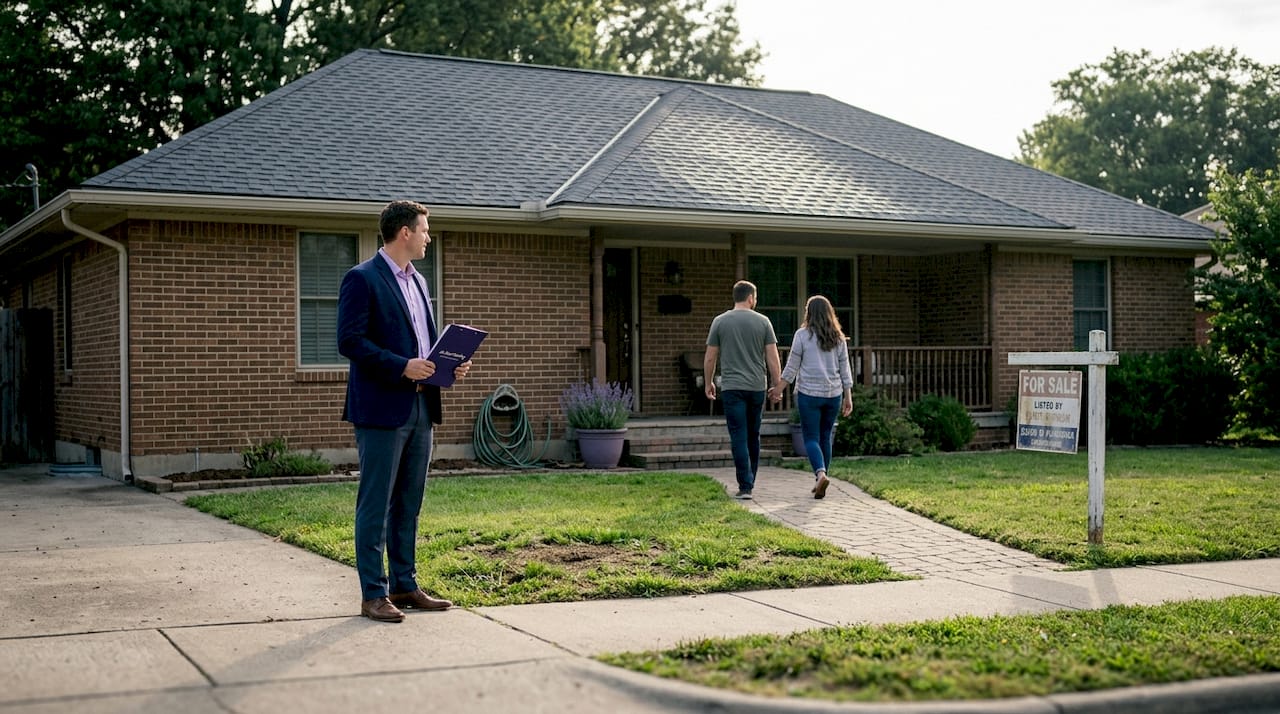
During home sales, roof age is one of the most common questions buyers ask. A home listed with a new or recently replaced roof commands more buyer confidence and often fewer negotiation concessions. Buyers know a roof replacement is a major expense, and knowing they won’t face that cost in the near future makes your home more attractive than comparable properties with aging roofs.
Here’s a comparison of how different roof conditions affect a home sale:
| Roof condition | Buyer confidence | Impact on offers |
|---|---|---|
| New roof (0 to 5 years) | Very high | Fewer concession requests, faster closing |
| Mid-life roof (5 to 15 years) | Moderate | May require inspection contingency |
| Aging roof (15 to 25 years) | Low | Buyers may negotiate for replacement credit |
| Failed or leaking roof | Very low | Significant price reduction or deal falls through |
Beyond resale, modern roofing materials offer real energy efficiency benefits. Newer shingles are designed with reflective coatings that reduce heat absorption, keeping your home cooler during North Carolina’s long, hot summers. Some roofing shingle types are rated for high-wind performance and carry extended manufacturer warranties, giving you long-term peace of mind. Understanding the different roof types for homes also helps you choose materials that match your home’s architectural style and your neighborhood’s aesthetic.
Pro Tip: If you’re planning to sell your home in the next three to five years, replacing an aging roof now often returns more than its cost through stronger offers and fewer repair concessions at closing.
Repair or replace? Making the smartest decision for your roof
Knowing the pros of roof replacement, the real question becomes when repairs are enough and when replacement is the smarter financial and practical choice.
The answer depends on several key factors. Age is the most important. A roof that is 10 years old with isolated damage from a single storm is often a strong candidate for targeted repairs. A roof that is 22 years old with multiple problem areas, recurring leaks, and visible granule loss is telling you something different. Patching it will only delay the inevitable, and each repair adds labor costs without extending the overall lifespan.
Here’s a step-by-step framework for thinking through your decision:
- Assess the age of your roof. If it’s within the first half of its expected lifespan and damage is isolated, repair is likely appropriate. If it’s past the 15-year mark with multiple issues, replacement warrants serious consideration.
- Calculate the repair-to-replace cost ratio. A general rule: if a repair costs more than 30% of the price of a full replacement, replacement is usually the wiser long-term investment.
- Evaluate the scope of damage. Single missing shingles or a flashing issue around a chimney are repair scenarios. Widespread shingle deterioration, soft spots on the deck, or active attic moisture are replacement signals.
- Consider your long-term plans. If you’re staying in the home for 10 or more years, a full replacement protects your investment better than a series of repairs. If you’re selling soon, a new roof can dramatically improve marketability.
- Get a professional assessment. A qualified roofer can tell you definitively what the structure of your roof looks like and whether repairs will hold. Reviewing customer roofing reviews can help you find a contractor you can trust.
One of the most common mistakes homeowners make is assuming that because a repair fixed the visible problem, the roof is sound. Temporary patches don’t address underlying deck damage, failed underlayment, or compromised flashing. These hidden issues continue to deteriorate and often lead to larger failures during the next severe weather event.
You can explore detailed roof repair options to understand what’s possible for your specific situation. If you still have questions about the process, our roofing FAQs cover the most common concerns homeowners raise before making a final decision.
Pro Tip: Ask your roofer to put in writing what a repair will and won’t address. If they can’t give you a clear answer about the condition of your roof deck and underlayment, get a second opinion before committing to either option.
A roofing pro’s take: The real reason to replace your roof before it fails
Here’s something we’ve learned from years of working on roofs across Burlington, Greensboro, and the surrounding Triad area: the homeowners who call us in a panic after a roof collapse or severe leak almost always knew something was wrong months or even years before they called. Life gets busy. Other expenses take priority. The roof holds up just well enough that replacing it doesn’t feel urgent.
Then a storm hits, and the situation changes completely. Now they’re not just dealing with a roof. They’re dealing with soaked insulation, damaged ceilings, water-logged drywall, and sometimes mold. What could have been a planned, budgeted project becomes an emergency that disrupts daily life and costs significantly more than the roof replacement alone would have.
Reactive replacements rob you of control. When you choose your replacement timeline, you can compare materials carefully, schedule work during optimal weather, and budget appropriately. When a storm or major failure forces your hand, you lose those advantages. You’re under time pressure, which limits your options.
What we always tell homeowners is this: your roof will eventually fail. Every roof does. The only question is whether you replace it on your terms or on the weather’s terms. A proactive roof inspection process gives you the information you need to make that decision with confidence, not in a moment of crisis.
The most practical thing you can do is have your roof professionally inspected every one to two years, especially after major storms. Knowing the current condition of your roof lets you plan, budget, and act at the right time.
Get trusted help for roof replacement in North Carolina’s Triad
If you’re ready to protect your home, here’s how to move forward with confidence.
At All About Roofing Co., LLC, we’ve helped homeowners across Burlington, Greensboro, Mebane, Eden, Chapel Hill, Hillsborough, Reidsville, Gibsonville, Graham, Elon, Browns Summit, and Oak Ridge make smart, informed roofing decisions. Whether you’re seeing early warning signs or dealing with active storm damage, our experienced team is here to help.
Start with a professional assessment. Book a roof inspection so you know exactly where your roof stands before you commit to anything. If repairs are the right call, you can learn about repair services and get a clear picture of your options. If a recent storm has caused damage, our storm damage help team can walk you through the insurance process and get your home protected quickly. Call us today for a free estimate and let’s take the guesswork out of protecting your home.
Frequently asked questions
How long does a typical roof last in North Carolina?
Most shingle roofs last 20 to 25 years in North Carolina, depending on weather exposure, installation quality, and materials used. Harsh storms and humidity in the Triad area can shorten that window.
Should I repair or replace my leaking roof?
If leaks are recurring or widespread across multiple areas of your roof, replacement is often more cost-effective and safer than repeated repairs that don’t address the underlying problem.
Will a new roof improve my home’s resale value?
Yes. A new roof can boost curb appeal and make your home significantly more marketable, often reducing buyer negotiation requests and supporting a stronger sale price.
Can insurance help pay for roof replacement after storm damage?
Homeowner’s insurance may cover roof replacement if storm damage is sudden and documented, but it typically won’t cover damage resulting from deferred maintenance or pre-existing deterioration.
How do I know which roofing material is best for my home?
Consult a roofing professional to compare options like asphalt shingles, architectural shingles, metal roofing, or tile based on your budget, your home’s design, and the specific climate demands of the Triad region.
