


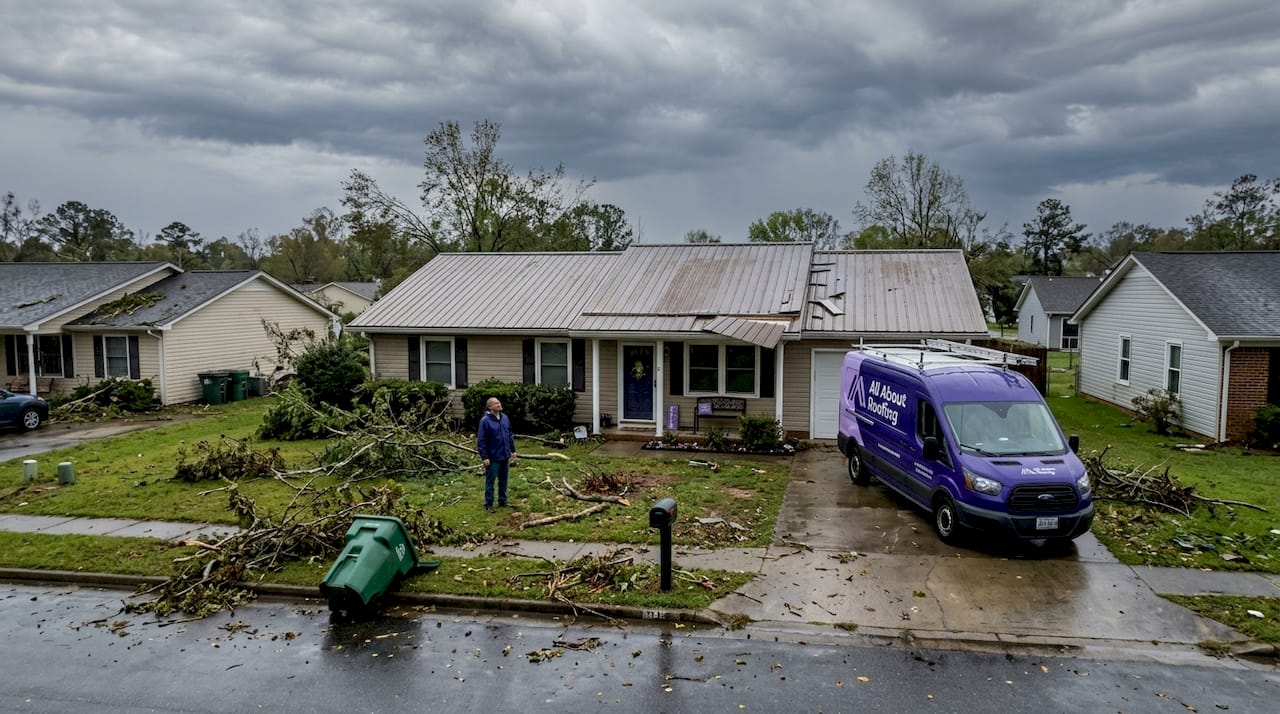
Wind storms don’t always announce their damage with obvious holes or collapsed sections. In fact, some of the most expensive roof repairs we see at All About Roofing Co., LLC start with something as subtle as a few lifted shingles or a slightly bent metal flashing. Many North Carolina homeowners assume that if their roof looks intact from the ground, they’re fine. That assumption can cost thousands of dollars in water damage, mold remediation, and full roof replacement down the road. This guide walks you through exactly what wind damage looks like, why North Carolina homes are especially vulnerable, and what steps you should take right now to protect your investment.
Table of Contents
- What is wind damage on a roof?
- How North Carolina storms impact roof durability
- Recognizing wind damage: Signs to look for
- Assessment and action: What you should do after wind damage
- Expert perspective: Why early action saves you money and hassle
- Get reliable help for roof wind damage in North Carolina
- Frequently asked questions
Key Takeaways
| Point | Details |
|---|---|
| Wind damage varies | Wind damage on roofs can appear as missing shingles, leaks, or bent metal, and is not always obvious. |
| Older roofs at risk | Roofs over 10 years old are much more vulnerable to storm and wind damage. |
| Metal offers protection | Metal roofs generally resist wind better but can fail from issues beyond the roof itself. |
| Early assessment matters | Spotting and addressing wind damage quickly prevents costly repairs and keeps your home safe. |
| Professional help is key | A qualified roofing inspection catches hidden wind damage and protects your investment. |
What is wind damage on a roof?
Wind damage is any physical harm caused to your roof’s materials and structure by wind forces, whether from a brief thunderstorm or a slow-moving hurricane. It’s not always dramatic. Most of the time, the signs are subtle and easy to miss unless you know what to look for.
Common forms of wind damage include:
- Missing shingles: High winds peel shingles away from the roof deck, leaving the underlayment exposed to sun, rain, and debris.
- Lifted or buckled edges: Even if a shingle isn’t fully gone, its edges can lift enough to allow water to enter underneath.
- Cracked or curled shingles: Wind stress weakens the material over time, causing cracks or curling at the corners and edges.
- Damaged flashing: Metal strips around chimneys, vents, and skylights can pull loose, creating major entry points for water.
- Granule loss: Asphalt shingles lose their protective granules during high winds, reducing their lifespan significantly.
How severe the damage gets depends on several factors: wind speed, wind direction, your roof’s pitch and age, and the type of roofing material installed. IBHS research on post-storm roof performance confirms that asphalt-shingle roofs experience high damage rates in major storms, with roof age and the quality of the cover system strongly affecting outcomes.
Important: Wind damage can occur even when a storm doesn’t feel particularly severe. A sustained wind of 50 to 60 mph is enough to lift older asphalt shingles that have lost their sealing adhesive over time.
Knowing about different shingle roofing types can also help you understand why some roofs hold up better than others. Architectural shingles, for example, are generally more wind resistant than basic three-tab shingles, thanks to their thicker build and stronger adhesive strips.
Pro Tip: If you can safely walk around your home after a storm, look at the ground. Piles of shingle granules near your downspouts or scattered across your yard are a clear sign that your roof took a hit, even if you can’t see missing shingles from street level.
How North Carolina storms impact roof durability
Understanding what wind damage looks like, let’s examine how North Carolina’s climate amplifies these risks.
North Carolina sits in a particularly challenging position when it comes to storm exposure. The state faces a wide range of severe weather events including Atlantic hurricanes, tropical storms, coastal nor’easters, and fast-moving inland squalls. Each of these brings its own wind profile, direction, and duration, all of which affect how your roof responds.
| Storm type | Typical wind speed | Primary roof risk |
|---|---|---|
| Tropical storm | 39 to 73 mph | Shingle lifting, granule loss |
| Category 1 hurricane | 74 to 95 mph | Missing shingles, flashing damage |
| Category 2 hurricane | 96 to 110 mph | Partial roof failure, deck exposure |
| Inland thunderstorm | 40 to 70 mph | Localized damage, debris impact |
| Nor’easter | 30 to 60 mph | Prolonged stress, edge lifting |
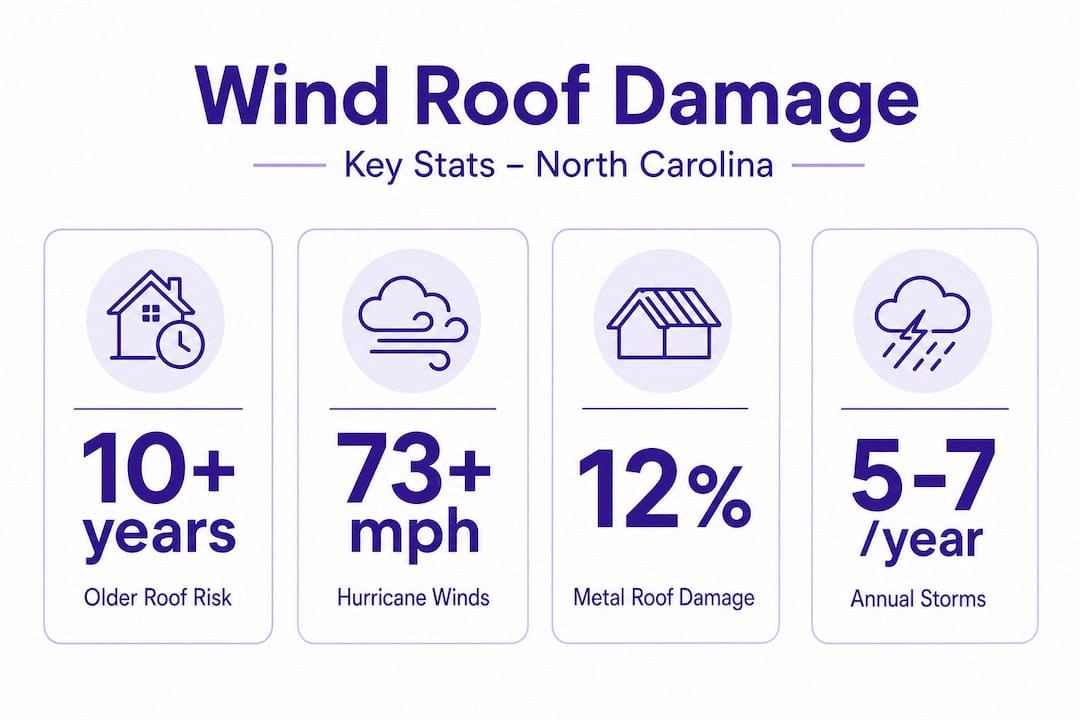
Shingle roofs are especially prone to damage in these events, and the age of the roof makes a dramatic difference. The same IBHS study on Hurricane Ian found that about half of shingle roofs had issues, and roofs 10 or more years old were especially vulnerable. That’s a significant finding, because many homes in Burlington, Greensboro, Mebane, and the surrounding communities have roofs well past that age threshold.
Key risks for North Carolina homeowners include:
- Aging shingles losing their seal strips, making them susceptible even in moderate winds
- Roof decks with older fasteners that can back out over time, weakening the entire surface
- Lack of proper attic ventilation, which causes heat buildup and accelerates shingle degradation
- Overhanging trees, common in many NC neighborhoods, which act as projectiles during storms
For a detailed look at how storms affect your specific roof, start with assessing storm damage as a first step, and consider scheduling a roof inspection process review with a qualified contractor before the next storm season arrives.
Statistic to know: Roofs that are 10 or more years old are significantly more likely to suffer storm-related damage, simply because materials and sealants have had time to degrade. If your roof falls in this category, it deserves closer attention after every major weather event.
Recognizing wind damage: Signs to look for
With an understanding of North Carolina’s storm effects, it’s crucial to know how to spot wind damage early. The sooner you identify it, the less expensive the repair will be.
Here’s a step-by-step approach to checking for visible wind damage from the ground:
- Walk the perimeter of your home after a storm, looking up at all roof angles and ridge lines.
- Check gutters and downspouts for shingle granules, which look like coarse sand.
- Inspect the roof edge for any shingles that appear lifted, curled, or misaligned.
- Look for exposed dark areas on the roof surface, which indicate missing shingles.
- Check around chimneys, vents, and skylights for gaps or lifted flashing.
- Go inside your attic and use a flashlight to look for daylight coming through, dark water stains, or soft spots in the decking.
- Check your ceilings and upper walls for water stains, discoloration, or peeling paint.
When comparing roofing materials, asphalt shingles and metal roofs behave very differently in wind events:
| Feature | Asphalt shingles | Metal roofing |
|---|---|---|
| Wind resistance | Moderate (up to 130 mph with proper installation) | High (up to 160 mph or more) |
| Damage pattern | Missing or lifted sections | Dents, loose fasteners, edge bending |
| Post-storm repair | Partial or full replacement | Often localized repairs |
| Damage rate in major storms | Significantly higher | Around 12% damage rates reported |
That metal roof damage rate is notable because when metal roof failures do occur, they are more often related to debris from nearby structures than to the metal roof itself failing. So even the most durable roof can suffer indirectly.
Pro Tip: Never attempt to get on your roof yourself after a storm. Wet or damaged surfaces are extremely slippery and structurally unpredictable. A trained roofer has the safety equipment and experience to assess conditions without putting themselves at risk. Schedule a professional roof inspection instead.
If you’re unsure what type of material would hold up best for your home, reviewing your shingle type comparison options is a great starting point before your next replacement decision.
Assessment and action: What you should do after wind damage
Once you’ve identified signs of wind damage, here’s how to assess and address the situation effectively.
Step 1: Document everything right away. Take photos and videos from multiple angles before any repairs begin. This is critical for insurance claims and helps your roofing contractor understand the full scope of damage.
Step 2: Protect vulnerable areas temporarily. If you have exposed areas or confirmed leaks, use a tarp or roofing tape to prevent further water intrusion until professional repairs can be made. Don’t attempt to repair the actual damage yourself.
Step 3: Call a roofing professional for an inspection. This is the most important step. A trained inspector can find hidden damage that you would never spot from the ground, including cracked decking, compromised underlayment, and damaged insulation.
Step 4: Understand your repair options.
- Spot repairs: Ideal when damage is limited to a few shingles or a section of flashing. Fast and cost-effective when the rest of the roof is in solid condition.
- Partial replacement: Necessary when wind has compromised a significant portion of one roof slope or area.
- Full replacement: Often the most practical choice when the roof is older than 15 to 20 years and has sustained widespread damage.
Step 5: Take preventative steps for the future.
- Have your roof inspected annually, ideally before hurricane season begins in June.
- Keep trees trimmed back at least 10 feet from the roof edge to reduce debris impact.
- Make sure attic ventilation is adequate, since heat buildup accelerates shingle failure.
- Ask your contractor about impact-resistant shingles if you’re planning a replacement soon.
When it comes to roof repair options, not every situation requires a full tear-off. But underestimating the damage is the most common and costly mistake homeowners make.
Research consistently confirms that roof-cover system performance strongly affects outcomes after storms. Investing in quality materials and staying on top of preventative roof maintenance genuinely reduces what you spend over time.
Pro Tip: Ask your roofing contractor for a written assessment report after any inspection. That documentation is useful for insurance purposes, future repairs, and if you ever decide to sell your home.
Expert perspective: Why early action saves you money and hassle
Here’s something we’ve seen time and again in our work across Burlington, Mebane, Greensboro, and beyond: the most expensive roof repairs we handle are almost never the result of one catastrophic storm. They are the result of small damage that sat unaddressed through one, two, or even three more storm seasons.
A homeowner calls us after a major repair job, and when we trace back the history, it usually starts with a few missing shingles after a storm two or three years ago. They thought it looked minor. They patched it themselves or left it alone. Water worked its way under the decking. The decking began to rot. Mold developed in the attic insulation. By the time the problem became undeniable, the repair cost had multiplied significantly compared to what a timely fix would have cost.
The conventional wisdom is to wait until there’s an obvious problem before calling a roofer. We’d challenge that thinking directly. Your roof is not like a car engine that seizes up and gives you clear warning signs. It fails gradually and quietly, and often in places you can’t see from inside your home or from the street.
Another point worth raising: many homeowners in North Carolina underestimate how cumulative annual storm exposure adds up. You might survive hurricane season with what looks like minor damage every year for a decade. But each event weakens the seal strips on your shingles, loosens fasteners, and stresses flashing connections. The roof that held up in Year 1 may fail dramatically in Year 10, not because one storm was especially bad but because ten years of storms wore it down gradually.
Protecting your NC home starts with understanding that annual inspections aren’t a luxury. They are a practical investment that can identify small issues before they become large ones. A professional inspection costs a fraction of what a major water damage repair costs.
Act early. The roof above you is the single most important barrier between your family and the weather. It deserves attention before things go visibly wrong.
Get reliable help for roof wind damage in North Carolina
You now have a solid understanding of wind damage, what causes it, how to spot it, and when to call for help. The next step is connecting with experienced professionals who know North Carolina’s weather patterns and can give your roof the expert attention it needs.
At All About Roofing Co., LLC, we help homeowners across Burlington, Greensboro, Mebane, Eden, Chapel Hill, Hillsborough, Reidsville, Gibsonville, Graham, Elon, Browns Summit, and Oak Ridge get back to feeling secure after storm damage. Whether you need NC storm damage repairs assessed quickly, a thorough professional roof inspection to uncover hidden issues, or a complete roof repair plan built around your budget and timeline, our experienced team is ready to help. We’re family owned, we stand behind our work, and we offer free estimates so you can make an informed decision without pressure. Call us today to schedule your inspection and protect your home before the next storm arrives.
Frequently asked questions
How can I tell if my roof has wind damage after a storm?
Look for missing shingles, lifted edges, visible debris on the roof surface, granules collecting in your gutters, or any new leaks inside your home. Because post-storm roof damage is often hidden, a professional inspection is the most reliable way to identify the full extent of any issues.
Why are older roofs more vulnerable to wind damage?
Shingle adhesives and fasteners degrade naturally over time, and roofs aged 10 or more years are significantly more likely to suffer wind-related problems because the materials can no longer seal and hold as effectively as they did when new.
Are metal roofs safer during storms?
Metal roofs are more wind resistant overall, with damage rates around 12% reported in major hurricane events. When failures do occur on metal roofs, they are most often caused by debris or structural issues from nearby buildings rather than the metal roof material failing on its own.
How soon should I seek repairs after spotting wind damage?
You should contact a roofing professional as quickly as possible, ideally within a few days of the storm. Delaying repairs allows water to penetrate further, and as roof-cover performance research shows, the condition of your roof system directly affects how well it holds up in the next weather event.
